Did you know that some first class tickets can cost up to 10 times more than economy? This raises a big question: Does the premium experience justify the price? Many travelers debate whether the extra perks are truly worth it.
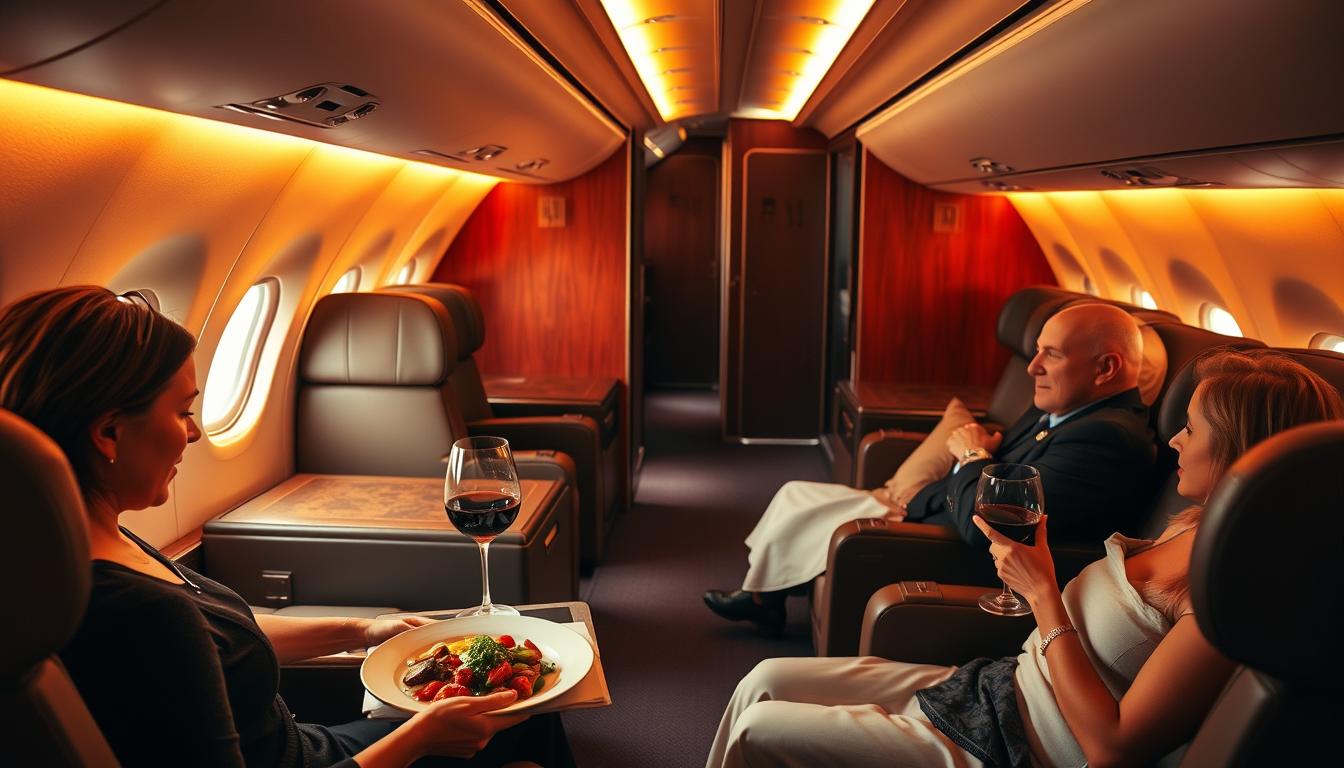
Imagine sipping champagne while enjoying a fully reclining seat. Or having dedicated space for your carry-on luggage. These are just a few luxuries that come with first class. Airlines like Delta, United, and American offer unique experiences, but the costs vary widely depending on the route.
So, is the splurge on a flight upgrade worth it? For some, the comfort and service make all the difference. For others, the high price tag is hard to justify. Let’s explore what makes this experience stand out.
Key Takeaways
- First class tickets can cost significantly more than economy.
- Luxuries include champagne, extra space, and premium service.
- Costs vary between airlines like Delta, United, and American.
- Comfort and convenience are key selling points.
- Deciding if it’s worth it depends on personal preferences and budget.
Introduction to First Class Travel
From the moment you arrive at the airport, the perks of flying first class become evident. Priority check-in and dedicated TSA lanes ensure a stress-free start to your journey. No long lines, no waiting—just a smooth transition from curb to gate.
Baggage allowances are another standout feature. Major carriers like Delta and United offer two free checked bags, while American Airlines ups the ante with three. This generous policy contrasts sharply with the restrictions often faced in economy class.
Boarding is equally streamlined. First-class passengers are among the first to step onto the plane, allowing ample time to settle in. This early access is a stark difference from the crowded boarding process experienced by other travelers.
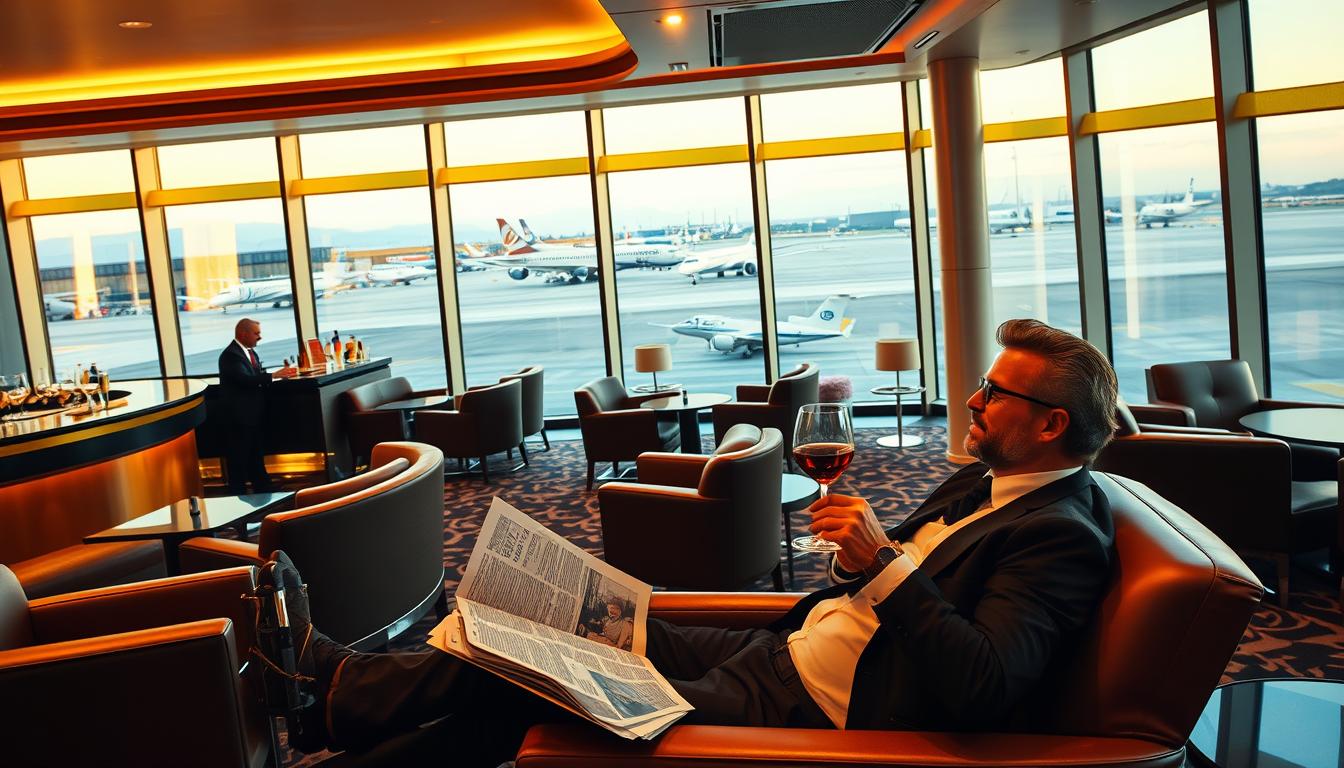
The airport experience itself is a world apart. From exclusive lounges to personalized service, every detail is designed to enhance comfort and convenience. These pre-flight advantages set the stage for the exceptional in-flight experience that follows.
What Makes First Class Different?
Ever wondered what truly sets premium air travel apart? It’s not just about getting from point A to point B. The experience is designed to make every moment enjoyable, from the seats to the service. Let’s dive into what makes this level of travel stand out.
Comfort and Space
One of the biggest differences is the amount of personal space. Delta offers an extra 8 inches of legroom and a 5.4-inch recline, making it easier to stretch out. United’s Polaris takes it further with 6’6” flat beds, perfect for long-haul flights. American Airlines also prioritizes comfort with spacious seating arrangements.
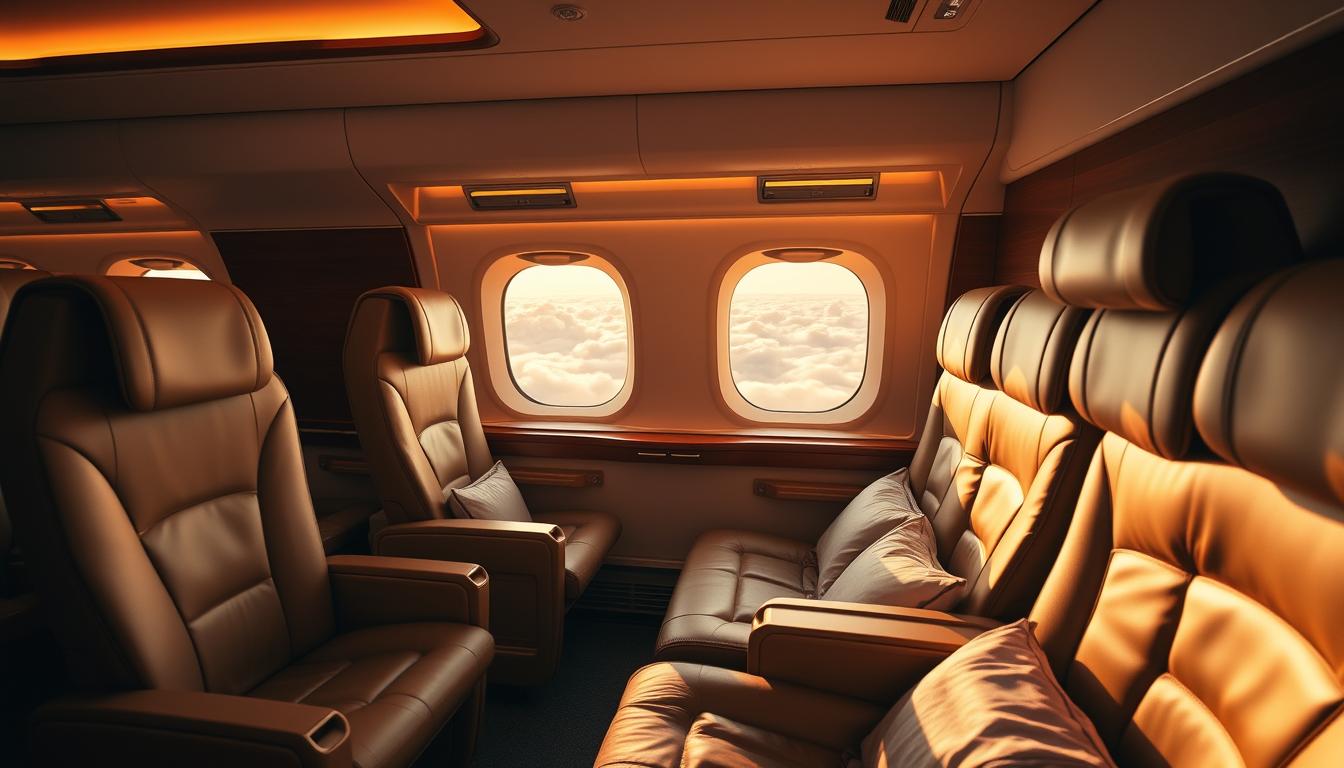
Beyond the seats, premium bedding adds another layer of luxury. United partners with Saks Fifth Avenue to provide high-quality bedding, while American Airlines offers Casper sleep sets. These touches ensure you arrive at your destination feeling refreshed.
Exclusive Amenities
Exclusive amenities elevate the experience even further. Delta’s amenity kits feature Grown Alchemist products, perfect for in-flight skincare. American Airlines collaborates with James Beard chefs to create gourmet meals, turning dining into a highlight of the journey.
Personalized service is another standout feature. Dedicated flight attendants ensure every need is met, from tailored meal options to assistance with luggage. The cabin crew’s attention to detail makes the trip feel truly special.
These amenities and services transform a simple flight into a memorable experience. Whether it’s the extra space or the thoughtful touches, premium air travel offers a level of comfort that’s hard to match.
Traveling First Class: Is It Worth the Hype?
The decision to splurge on a luxury flight experience can be a tough one. For example, a ticket from LAX to Paris in economy costs $1,180, while the same route in a premium cabin can soar to $18,606. Is the extra cost justified by the added value?
Premium cabins often come with a price multiplier of 10x or more. This stark difference raises questions about necessity versus indulgence. For some, the unparalleled comfort and exclusive amenities make it a worthwhile investment. For others, the high price is hard to justify.
Credit card mile redemption strategies can make premium travel more accessible. Cards like Amex Gold and Venture offer points that can be redeemed for international flights. For instance, Lufthansa allows upgrades to their premium cabin for 87,000 miles plus $22 in fees.
Here’s a breakdown of cash vs points scenarios:
| Option | Cost | Value |
|---|---|---|
| Cash Purchase | $12,707 | Immediate access |
| Points Redemption | 87,000 miles + $22 | Significant savings |
Real passenger stories highlight the appeal of premium travel. One traveler shared how an upgrade to a first class cabin turned a long-haul flight into a relaxing retreat. Another emphasized the convenience of priority boarding and extra baggage allowances.
Ultimately, the decision hinges on personal preferences and budget. For those who prioritize comfort and exclusivity, the premium experience is unmatched. For others, economy remains a practical choice.
Comparing First Class Across Airlines
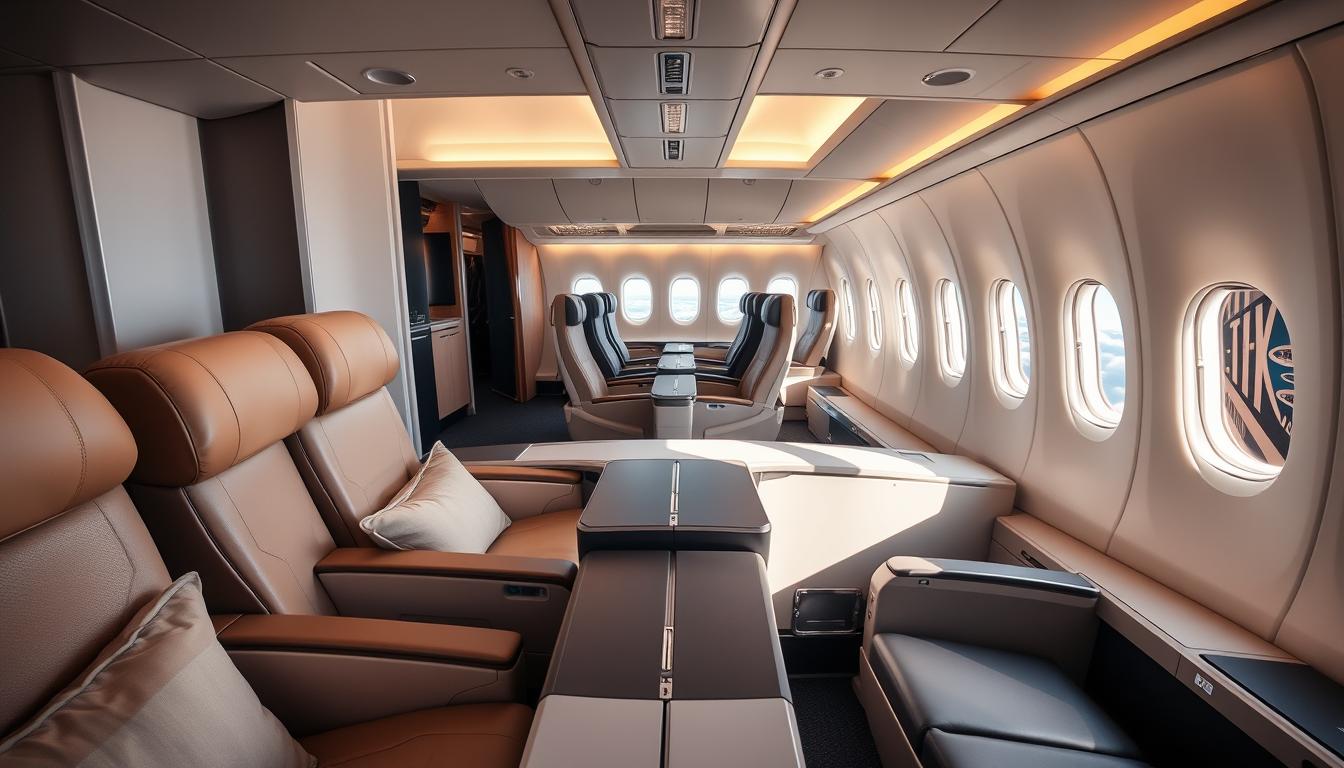
When it comes to premium air travel, not all airlines are created equal. Each carrier offers unique features that cater to different preferences. From seating to meal service, the experience varies significantly. Let’s explore how Delta Air Lines, United Airlines, and American Airlines stand out.
Delta Air Lines
Delta Air Lines focuses on elevating the in-flight dining experience. On flights over 900 miles, passengers enjoy chef-curated meals. The tiered meal system ensures fresh, high-quality options tailored to flight duration. Comfort is also a priority, with spacious seating and ample legroom.
United Airlines
United Airlines offers a blend of entertainment and comfort. Domestic First passengers can access DirecTV, while Polaris business class provides flat-bed seats for long-haul flights. The airline’s attention to detail ensures a seamless journey, whether you’re flying transcontinental or international.
American Airlines
American Airlines stands out with its celebrity chef partnerships and generous baggage policies. On select routes, passengers can check up to three bags for free. The airline’s focus on culinary excellence and convenience makes it a top choice for premium travelers.
| Airline | Key Features |
|---|---|
| Delta Air Lines | Chef-curated meals, spacious seating |
| United Airlines | DirecTV access, Polaris flat-bed seats |
| American Airlines | Celebrity chef meals, 3 checked bags |
Each airline brings something special to the table. Whether it’s Delta’s gourmet meals, United’s entertainment options, or American’s baggage perks, the choice depends on your priorities. Understanding these differences can help you make the most of your premium travel experience.
Domestic vs. International First Class
The experience of premium air travel varies greatly between domestic and international routes. While domestic first class offers comfort and convenience, long-haul international flights take luxury to another level. Let’s explore the key differences.
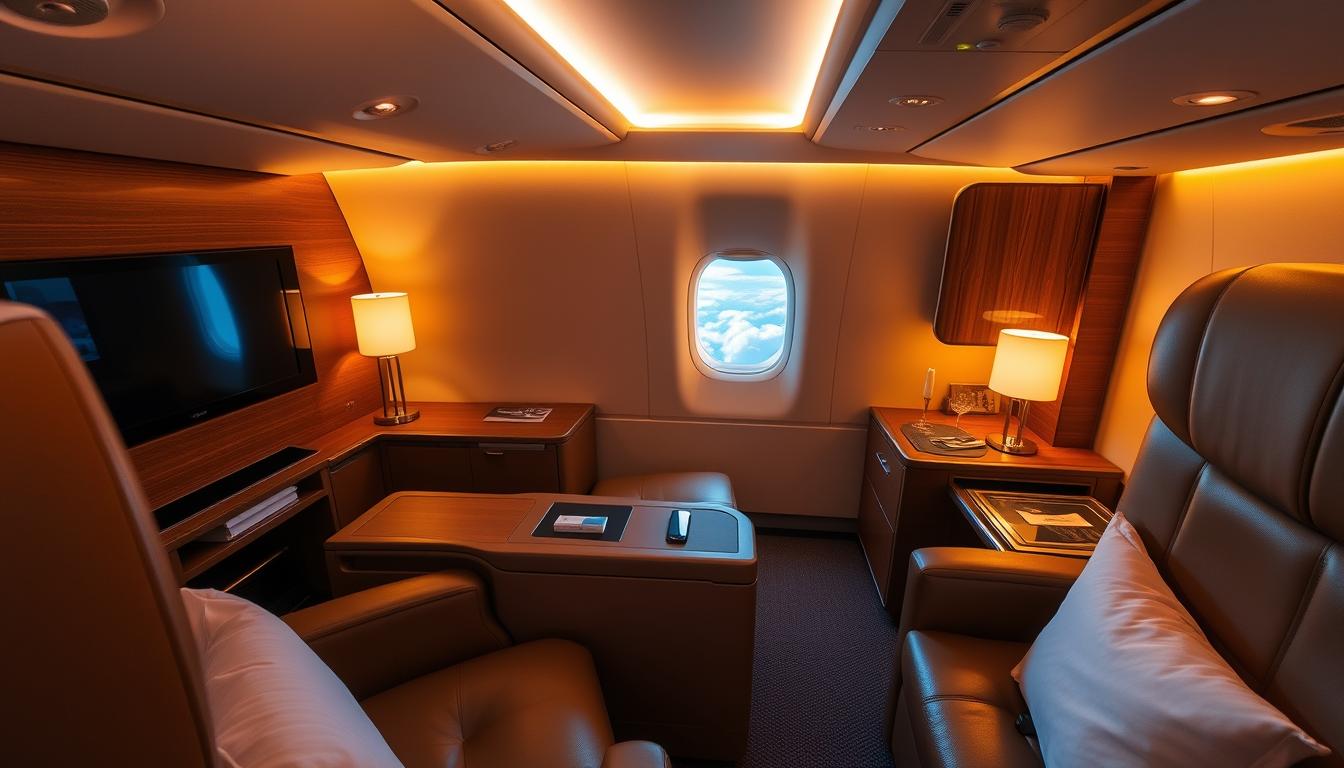
Seat types are a major contrast. On domestic routes, passengers enjoy leather recliners with ample legroom. International flights, however, often feature enclosed suites or lie-flat beds. Emirates’ A380 even includes private suites with showers, a far cry from the simpler recliners found on shorter routes.
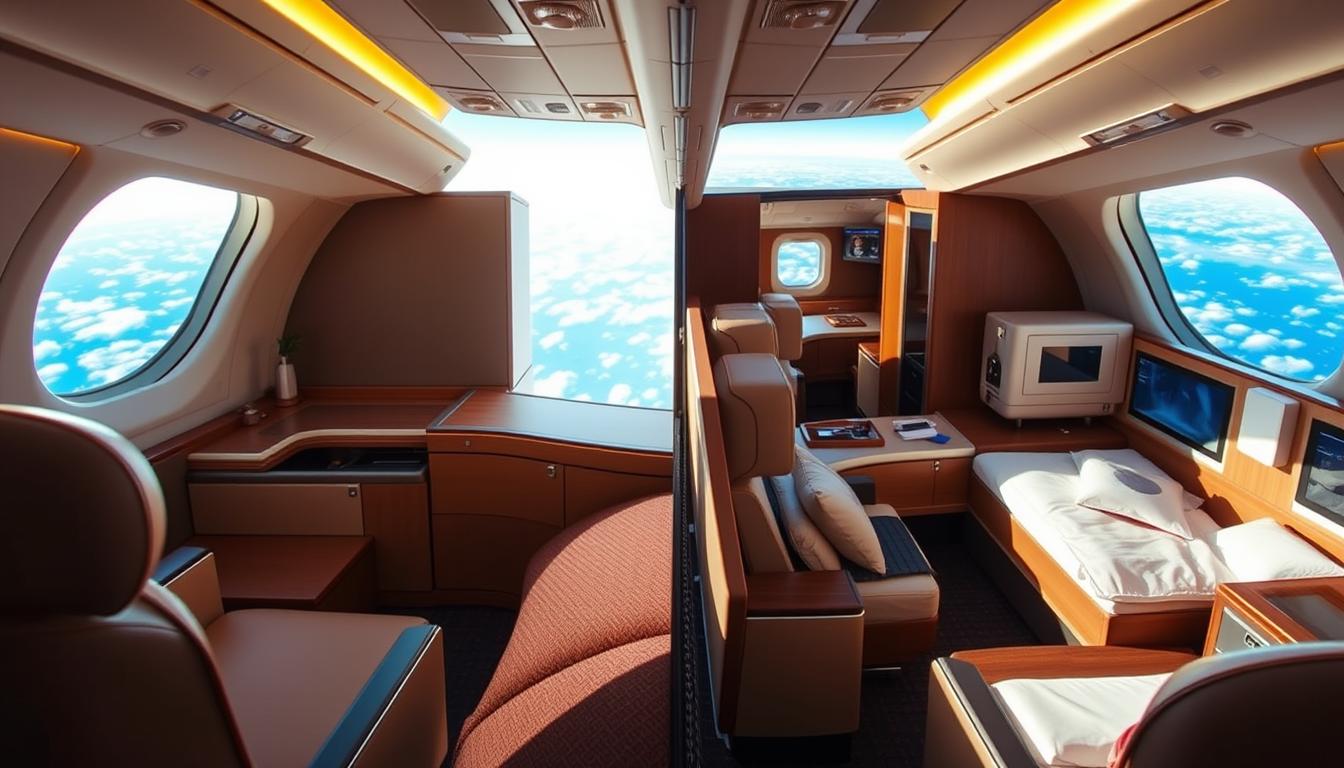
Meal services also differ significantly. Domestic flights typically offer snack boxes or light meals. International routes, on the other hand, provide multi-course dining experiences curated by renowned chefs. This elevates the journey from a simple trip to a culinary adventure.
Ground services add another layer of distinction. Domestic travelers may have access to basic lounge facilities. International passengers often enjoy chauffeur services, exclusive lounges, and priority boarding. These perks ensure a seamless experience from start to finish.
Sleep quality is another factor. While domestic flights provide comfortable bedding, international routes offer true flat beds for uninterrupted rest. This makes a significant difference on overnight journeys.
Here’s a quick comparison of the two experiences:
| Feature | Domestic First Class | International First Class |
|---|---|---|
| Seat Type | Leather recliners | Enclosed suites, lie-flat beds |
| Meal Service | Snack boxes, light meals | Multi-course dining |
| Ground Services | Basic lounge access | Chauffeurs, exclusive lounges |
| Sleep Quality | Comfortable bedding | True flat beds |
Exception routes, like premium transcontinental flights, blend the best of both worlds. These routes offer international-level amenities on shorter journeys, making them a popular choice for travelers seeking luxury without the long flight time.
Whether you’re flying domestically or internationally, the premium experience is designed to make your journey unforgettable. The choice ultimately depends on your travel needs and preferences.
First Class vs. Business Class
Choosing between premium cabins can be a game-changer for your travel experience. While both first class and business class offer elevated comfort, the differences lie in the details. From cabin configurations to service quality, understanding these distinctions can help you make the best choice.
On three-cabin aircraft, the cabin setup varies significantly. First class often features fully enclosed suites or lie-flat beds, while business class may offer angled lie-flat seats. For example, Singapore Airlines’ business class includes suite doors, providing added privacy. United Airlines treats its business class as a first class equivalent on Latin America routes, blurring the lines between the two.
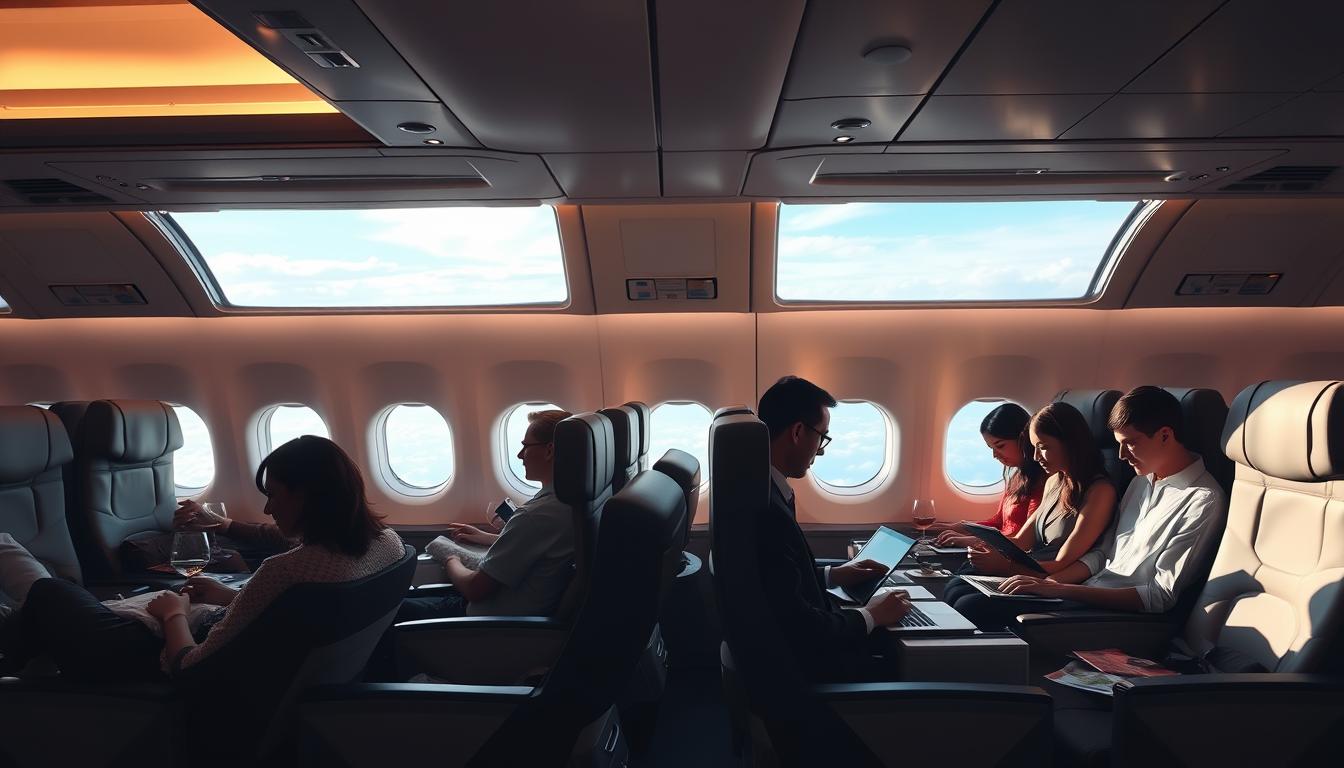
Meal service is another area where the two classes differ. First class typically offers multi-course dining curated by renowned chefs. Business class meals are still high-quality but may lack the same level of customization. Both classes, however, surpass premium economy in terms of culinary excellence.
Privacy features also set these cabins apart. First class often includes full doors or partitions, creating a secluded space. Business class may offer partitions but rarely provides the same level of enclosure. This distinction can make a big difference on long-haul flights.
Frequent flyer upgrade probabilities vary between the two. Upgrading to business class is often more accessible due to lower point requirements. First class upgrades, while more exclusive, can be harder to secure. Here’s a quick comparison:
| Feature | First Class | Business Class |
|---|---|---|
| Cabin Configuration | Enclosed suites, lie-flat beds | Angled lie-flat seats, partitions |
| Meal Service | Multi-course dining | High-quality meals |
| Privacy | Full doors, partitions | Partitions |
| Upgrade Probability | Lower | Higher |
Amenity kits also highlight the differences. First class kits often include luxury skincare products and high-end accessories. Business class kits are more standard but still offer essentials for a comfortable journey. These small touches can enhance your overall experience.
Ultimately, the choice between first class and business class depends on your priorities. If you value exclusivity and unparalleled comfort, first class is the way to go. For a balance of luxury and practicality, business class offers excellent value.
Premium Economy: A Middle Ground?
Looking for a balance between luxury and affordability? Premium economy might be the answer. This cabin class bridges the gap between economy class and business, offering enhanced features without the steep price tag.
Seat specs are a major upgrade. For example, Delta Comfort+ provides an extra 3-4 inches of legroom, making it comparable to domestic first class dimensions. The seats are wider and offer more recline, ensuring a more comfortable journey.
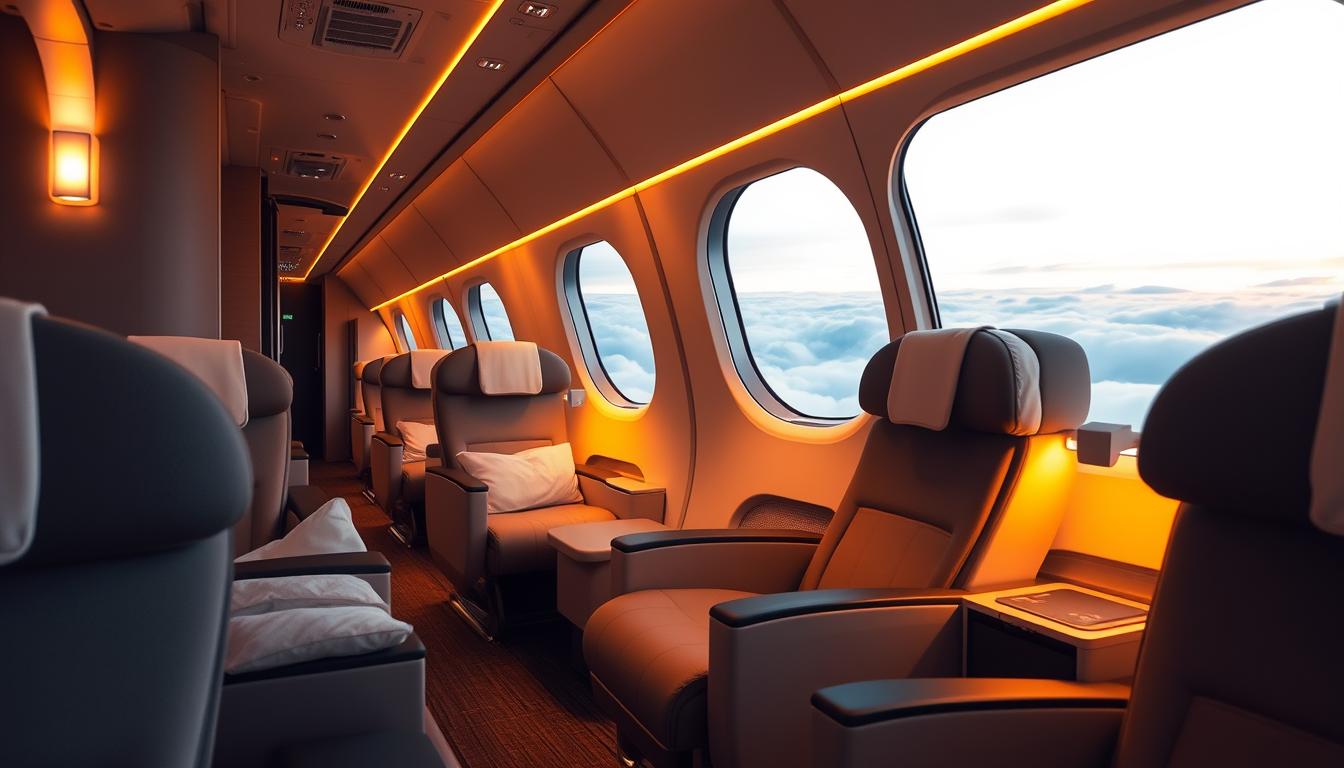
Meal service also sees improvements. While not as lavish as business class, premium economy meals are a step above standard economy class offerings. Expect better quality and more variety, especially on long-haul flights.
Baggage allowances are another perk. Most airlines allow an additional checked bag, reducing the stress of packing. This is a significant upgrade from the restrictive policies in economy class.
When evaluating the price-performance ratio, premium economy shines. It’s more affordable than business class but delivers a noticeable upgrade in comfort and convenience. This makes it ideal for travelers who want a better experience without breaking the bank.
Best use cases include long-haul flights, where the extra space and amenities make a real difference. It’s also a great option for those who prioritize comfort but need to manage cost effectively.
Using Miles to Upgrade to First Class
Maximizing your travel rewards can transform your journey into a luxurious experience. By strategically using miles, you can unlock premium cabins without breaking the bank. Let’s explore how to make the most of your loyalty programs and credit cards.
Major airlines like Delta, United, and American offer robust loyalty programs. Each program has unique benefits, but the key is understanding their redemption values. For example, Lufthansa allows upgrades to their premium cabin for 87,000 miles plus $22 in fees, compared to a $12,707 cash fare.
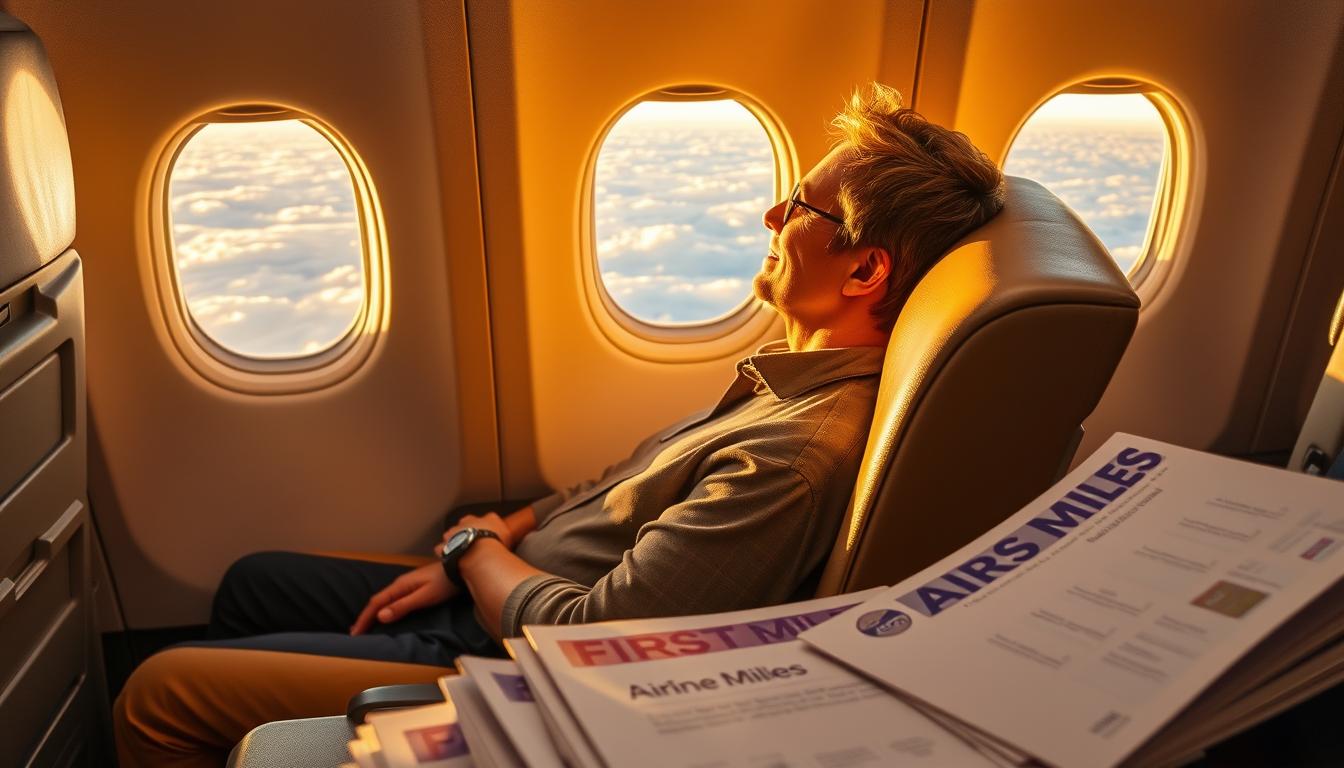
Credit card bonus categories can accelerate your points accumulation. The Amex Gold card offers 4x points at restaurants and supermarkets, making it easier to earn miles for everyday purchases. Pairing this with expert mileage stacking strategies can maximize your rewards.
Here’s a comparison of point redemption values across major airlines:
| Airline | Upgrade Cost | Cash Fare |
|---|---|---|
| Lufthansa | 87,000 miles + $22 | $12,707 |
| Delta | 75,000 miles + $50 | $10,000 |
| United | 80,000 miles + $30 | $11,500 |
Expert advice is crucial when navigating capacity-controlled awards.
“Always book your upgrades as early as possible to secure availability,”
says a frequent flyer expert. This ensures you don’t miss out on the chance to enjoy a premiumticket.
By understanding the nuances of loyalty programs and leveraging credit cards, you can make your dream of flying in style a reality. Whether it’s a domestic or international route, the right strategy can turn your miles into unforgettable experiences.
Real-Life First Class Experiences
Stepping into the world of premium air travel reveals a realm of unparalleled luxury and service. From the moment you board, the experience is designed to make every detail unforgettable. Let’s dive into what makes these journeys so extraordinary.
One of the highlights is the multi-course meal service. On Cathay Pacific, for example, you might start with a duck appetizer followed by beef tenderloin, paired with a glass of champagne. The timing is impeccable, ensuring you enjoy each course without feeling rushed.
Premium lounges elevate the journey even further. Virgin Atlantic offers haircuts and spa treatments, allowing you to relax before your flight. These amenities transform layovers into moments of indulgence.
The flight attendant service is another standout. Crew members are trained to anticipate your needs, from personalized greetings to remembering your drink preferences. This attention to detail makes the experience feel truly special.
Entertainment systems are state-of-the-art, with larger screens and a wider selection of movies and shows. Some airlines even offer noise-canceling headphones for an immersive experience.
Celebrity encounters add an extra layer of excitement. One traveler shared how they sat next to a famous actor on a flight, making the journey even more memorable.
Here’s a quick overview of what to expect:
- Multi-course meals with gourmet options
- Premium lounges with spa treatments
- Attentive flight attendant service
- Advanced entertainment systems
- Chance encounters with celebrities
These real-life stories highlight why premium air travel is more than just a way to get from one place to another. It’s an experience that leaves a lasting impression.
Conclusion
Deciding whether to invest in a premium flight experience requires careful consideration. The cost-benefit analysis often hinges on personal priorities. For international routes, the added luxury of lie-flat seats and gourmet meals can justify the splurge. Domestic flights, while comfortable, may not offer the same level of exclusivity.
Using miles for upgrades can be a smart compromise. Loyalty programs from airlines like Delta and United make premium travel more accessible. This approach balances cost with comfort, offering a middle ground between economy and luxury.
Ultimately, the decision depends on your budget and preferences. If you value unparalleled comfort and service, premium cabins are worth the investment. For others, economy remains a practical choice.
We’d love to hear your thoughts! Share your experiences with first class or other cabin classes in the comments below.
FAQ
What are the main benefits of flying first class?
First class offers extra legroom, lie-flat seats, gourmet meals, and access to exclusive lounges. It’s designed for comfort and luxury, especially on long-haul flights.
How does first class compare to business class?
First class provides more space, better food, and enhanced privacy. Business class is a step down but still offers premium seating and amenities.
Can I use miles to upgrade to first class?
Yes, many airlines like Delta, United, and American allow you to use frequent flyer miles for upgrades. Availability depends on your loyalty program and route.
Is domestic first class different from international first class?
Domestic first class often includes wider seats and better meals. International first class adds lie-flat beds, luxury amenities, and more personalized service.
What airlines offer the best first class experience?
Delta Air Lines, United Airlines, and American Airlines are top choices. Air France and other international carriers also excel with their premium cabins.
Is premium economy a good alternative to first class?
Premium economy offers more comfort than standard economy but lacks the luxury of first class. It’s a budget-friendly middle ground for long flights.
What amenities can I expect in first class?
Amenities include noise-canceling headphones, plush bedding, premium toiletries, and fine dining. Some airlines even offer champagne and private suites.
How does first class enhance the travel experience?
From priority boarding to dedicated flight attendants, first class ensures a stress-free journey. The extra comfort makes long flights feel shorter and more enjoyable.
Are first class tickets worth the cost?
It depends on your budget and travel needs. For long-haul international flights, the added comfort and perks can make the expense worthwhile.
What should I know before booking first class?
Check for deals, use miles if possible, and compare airlines. Research the specific perks offered on your route to ensure the best experience.