
Surprising fact: studies show coastal air rich in negative ions can lift mood for up to 30 percent of visitors, making the ocean a powerful reset for stress.
The Evergreen Coast pairs wild ocean rhythms with deep forest quiet to create a setting that invites calm. You’ll find dramatic viewpoints, quiet corners, and still waters that shape a clear sense of restoration.
This guide helps you match places on the olympic peninsula to the stay you want. Whether you crave wave-washed shorelines, mossy groves, or gentle kayaking on serene bays, you’ll learn how air, water, and trees shape your experience.
When you’re looking for a cabin base, this piece shows practical travel tips, season notes, and simple mindfulness steps to layer into your days. Use these ideas to plan a trip where the spirit of the coast supports true relaxation.
Key Takeaways
- Coastal air and water sounds can improve mood and reduce stress.
- Choose a setting—ocean, forest, or still water—to match your relaxation goals.
- Regional gateways simplify travel planning across the olympic peninsula.
- Classic lodges and cozy cabins offer varied experiences for every traveler.
- Simple mindfulness practices deepen your visit without extra gear.
- Check seasonality and charging options to keep logistics smooth.
How to use this guide to plan your rainforest retreat
Start simple: pick the mood you want and let it steer choices for place, pace, and lodging. This keeps your days uncluttered and focused on calm.
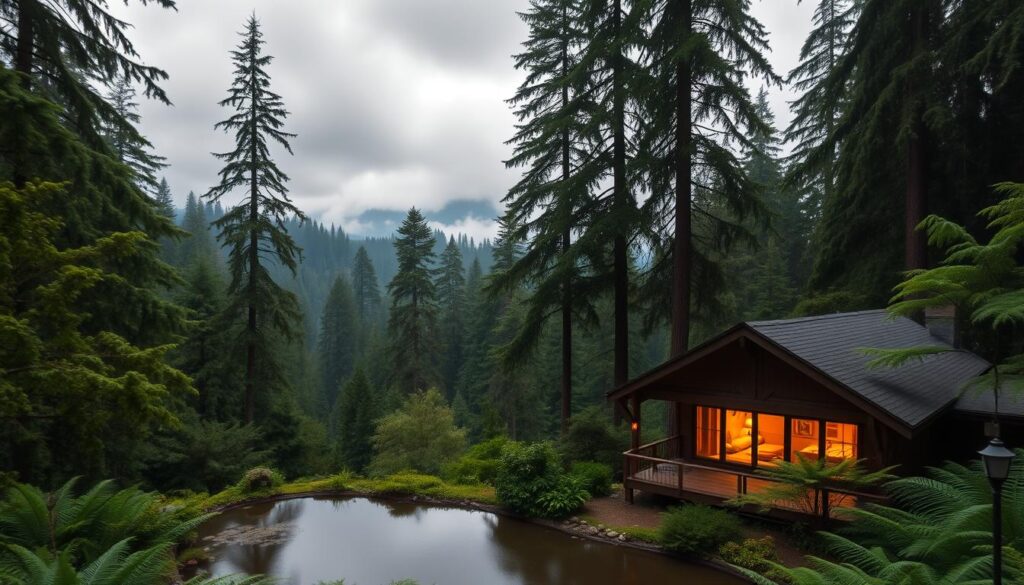
Match your sense of relaxation to the right setting
Decide if you want ocean energy, forest grounding, or river calm. Each setting shapes how you move and rest.
- Ocean: Long Beach Peninsula or Cape Disappointment for wide horizons and meditative walks.
- Forest: Base near Forks for early starts at Hoh and mossy groves.
- River/lake: Sol Duc and Lake Crescent offer sheltered water and slow paddles.
Decide on trip length and travel window
Two nights works for a quick reset; three to four nights help you unwind without racing across the area. Base your location to reduce transit time.
- Use Forks for forest-and-beach combos; Port Angeles for multiple national park access.
- Plan one open half-day for unplanned rest and quieter Discovery Trail segments in the afternoon.
Understanding Washington’s rainforest regions and why they heal
You feel how the place works on you: the surf slows the breath, forest shade narrows attention, and still water steadies thought.
Ocean air, negative ions, and the calming rhythm of waves

Fresh coastal air along the washington coast carries negative ions that can lift mood and lower stress. A morning walk on Long Beach or a pause by Cape Disappointment lets the steady surf act as moving meditation.
Towering trees, moss, and the forest’s grounding effect
Enter a forest stand and the world quiets. Moss-draped branches and towering trees reduce sensory load and help you feel rooted.
Short, mindful strolls on shaded trails boost attention and make it easier to notice small joys of nature.
Water’s restorative presence: lakes, rivers, and sheltered bays
Calm water—from bays to lakes—offers mirrored views that invite reflection and perspective. Willapa Bay and quiet river edges provide stillness that balances movement from beach and wood.
- Tip: Mix habitats across a day to sense distinct effects on your energy and mood.
Olympic Peninsula essentials: your gateway to Olympic National Park
Pick a practical base on the Olympic Peninsula that trims drive time and adds hours for exploring. Your choice of location shapes each day—how many miles you drive, which trails you reach, and where you watch sunset.
Where to base yourself
Base yourself near Forks, Port Angeles, or Lake Crescent for easy access
Choose Forks to minimize minutes on the road and reach Hoh Rain Forest early. From Forks you can finish days with soft light at Second Beach, about 15 minutes away.
Stay in Port Angeles when you want services, dining options, and flexible access to multiple park areas. Port Angeles is a good hub for varied day trips across the national park.
Consider Lake Crescent if you prefer still-water mornings and close trailheads. Lake Crescent Lodge runs seasonally, so check availability for shoulder months.

Top nature-forward spots: Hoh Rain Forest, Sol Duc, Second Beach
Group nearby stops by miles and timing. Pair Sol Duc valley visits with Lake Crescent for efficient travel. Match Hoh Rain Forest with Rialto or Second Beach for a balanced day.
“Start early for popular trails and arrive late afternoon for quieter shoreline sunsets.”
| Base | Best for | Minutes to key spots | Notes |
|---|---|---|---|
| Forks | Forest access & cabin options | ~15 min to Second Beach; 30–60 to Hoh | Woodland Inns offers new cabins near town services |
| Port Angeles | Services, dining, park gateway | 20–60 miles to many park areas | Good hub for multi-area day trips and supplies |
| Lake Crescent | Still-water mornings & trailheads | Short walks to lakeside trails; seasonal lodge | Ideal for quiet starts and pairing with Sol Duc |
Map your days by miles and pace. Build one low-mileage day to rest and enjoy nature without long drives.
Healing Hideaways: where to stay
Where you stay shapes each day’s rhythm, from early trailheads to late-night stargazing on a porch. Choose a spot that trims travel time so you can soak up more nature and quiet.

Classic lodges with spirit: Lake Quinault Lodge and Lake Crescent Lodge
Book Lake Quinault Lodge for heritage charm and forest-framed views. Lake Crescent Lodge offers lakeside beauty and easy access to nearby trails.
Note that both properties have seasonal openings; many services run mainly May–October.
Cozy cabins and tiny houses near the Hoh and Sol Duc
Pick Woodland Inns in Forks for cabin comforts close to food and services. Families and small groups like its practical layout between day trips.
Consider Sol Duc Den, a tiny house option, for minimalist stays that keep you close to Sol Duc valleys and beaches.
Under-the-radar inns around Long Beach and Cape Disappointment
Seek Ilwaco harbor inns or quiet Oysterville properties for a strong ocean atmosphere and quick access to North Head Lighthouse and the Discovery Trail.
- Look for: private decks, river or lake view, a shared tub or hot tub to elevate evenings.
- Book smart: confirm seasonal operations, scan listings for kitchenettes, gear storage, and parking, and prefer direct booking where possible.
- Plan: filter options by location to cut drive time and keep mornings unrushed. Keep two backups during peak travel season.
“Choose lodgings that support your planned days—less driving means more time to notice the view and the quiet.”
Forest retreats: cabins and tiny houses under towering trees
Find a quiet base where river songs and tall trunks shape your days. These forest retreats put you close to mossy banks and private decks. They offer practical comfort for post-hike rest and easy access to the national park.

Sol Duc Serenity and Dragonfly Retreat: riverfront rest with hot tubs
Sol Duc Serenity gives you a private deck over the river and a soothing hot tub for evening stargazing. Pair morning coffee with flowing water and quiet forest shade.
Dragonfly Retreat adds a gas fireplace and river views from the deck. It sits within easy reach of Sol Duc Hot Springs, Lake Crescent, and La Push beaches, and includes a second hot tub option for muscle recovery.
Woodland Inns in Forks: cabin comforts minutes from trails and beaches
Woodland Inns offers new-build cabin layouts that save you drive time. You’ll be just minutes from trailheads and local services, which helps you start hikes early and return for simple family meals.
Tiny-house basecamps like Sol Duc Den for minimalist, mindful stays
Choose a tiny house such as Sol Duc Den when you want efficient space and quick staging for day trips across the olympic peninsula. This compact home is ideal for solo travelers or small family groups who value a low-footprint stay.
- Confirm kitchen basics, outdoor seating, and parking before booking.
- Look for a tub or hot tub to mix stargazing with recovery after long hikes.
- Seek cabins with mudroom nooks if you plan to manage wet gear or photography equipment.
| Property | Key feature | Best for | Location note |
|---|---|---|---|
| Sol Duc Serenity | River deck & hot tub | Couples & quiet evenings | Near Sol Duc valley |
| Dragonfly Retreat | Fireplace & river view | Small groups | Close to Lake Crescent |
| Woodland Inns | New cabin comforts | Families & quick trail access | Minutes to Forks services |
| Sol Duc Den | Tiny house layout | Minimalist travelers | Practical base for day trips |
Choose the option that matches your pace. A thoughtful location and the right cabin type shape the trip experience and help you make the most of forest time.
Coastal calm: Washington Coast, Long Beach, and Cape Disappointment
A shoreline day here reads like a slow book: wide sand, steady surf, and room to breathe.

Plan a full morning at Long Beach where you can walk for miles along open shore. The salt-kissed air and flat sand help clear your mind and set a steady pace for the day.
Mix beach walking with sections of the Discovery Trail to Ilwaco. You’ll move from dunes to meadows to wind-scoured pine without losing the coastal rhythm.
Climb North Head Lighthouse for sweeping views of the ocean and cliffside trails. Those higher vantage points reset perspective and reward patient watchers with seabirds and changing light.
For quieter moments, choose Oysterville’s boardwalks and historic homes, or paddle Willapa Bay on calm days to watch herons in sheltered inlets. Leadbetter Point offers dune solitude and marsh bird calls at sunset.
- Time outings around tides to reveal more beach and gentler surf.
- Arrive early or late for fewer people and better wildlife sightings.
- Pack binoculars and end the day with a simple meal at an Ilwaco harbor inn to let the coastal spirit finish the experience.
Lakes and rivers: water-side havens around Port Angeles and Lake Crescent
A morning paddle on glassy water can set the pace for a day that mixes trails and rest without rush.
Choose a lakeside cabin near Port Angeles and you can plan a dawn paddle, an afternoon in the national park, and sunset on a dock within easy driving minutes.
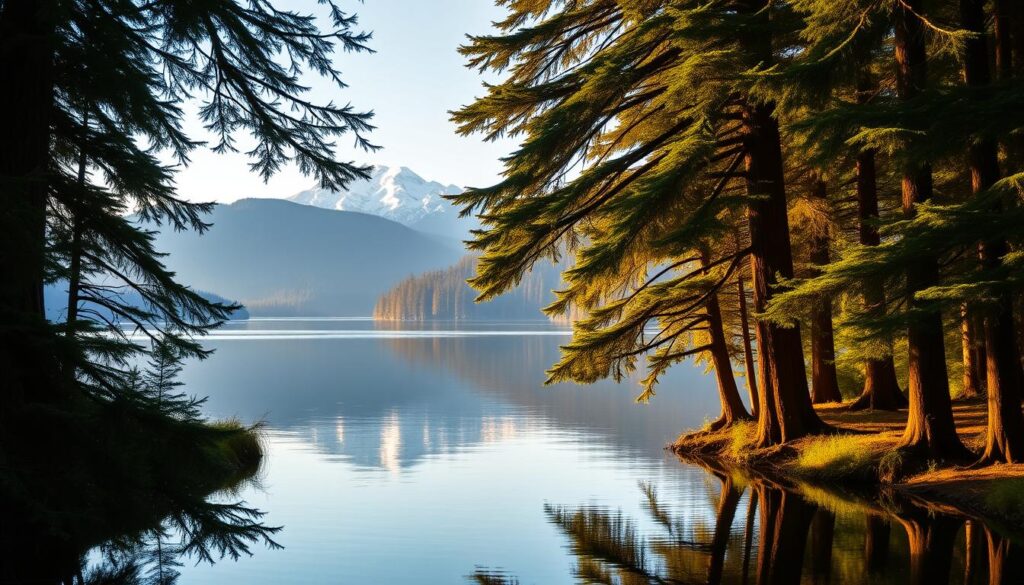
Lakeside A-frames and saunas near Lake Sutherland
Look for A-frame or modern cabin designs that frame mountain and forest views. Many properties, like Lakefront Cabin and “The Perch,” include a hot tub or tub on the deck.
Reflection Haven and Private Lake Cabin add saunas for a warm finish after a cool swim. Confirm heating and sauna hours when you book, especially in shoulder months.
Kayaks, paddle boards, and evening views over glassy water
Seek listings that provide kayaks or paddle boards so you can slip onto calm water within minutes of waking. Early mornings usually mean the smoothest surface and the best photo-friendly view.
- Tip: Target a location within 20–30 minutes of Port Angeles for quick grocery runs and flexible day plans.
- Tip: Verify dock access, life jackets, and watercraft rules with the host before arrival.
- Tip: Alternate active paddle days with quiet evenings on the deck, journaling, or a long soak in the tub.
“Balance water time with short hikes around Lake Crescent for easy waterfall detours and lakeshore picnics.”
For similar cozy stays elsewhere, consider checking cozy cabins at cozy cabins for ideas on layout and amenities that work well near lakes.
Mindfulness practices to deepen your rainforest experience
A few simple rituals—breathwork, gentle yoga, and journaling—turn scenery into a usable, calming routine. These practices help you move from travel mode into a slower, more attentive way of being.
Beach meditation and breathwork by the waves
Start your day on the beach and match inhales to the rise of a wave, exhales to its fall. This steady rhythm supports focused meditation and a clear sense of calm.
Yoga in forest clearings beneath evergreen canopies
Find a small clearing and do gentle flows that emphasize breath and balance. Pine-scented air makes breathwork feel easier and grounds your body for the day.
Journaling with a view to restore spirit and balance
Sit with a simple prompt—“What do I notice right now?”—and write for five to ten minutes. A view of lake, meadow, or shore turns observations into quiet insight.
Evening soak: choosing properties with a hot tub for stargazing
Pick a cabin or lodge with a hot tub or tub. Warm water eases muscles after hikes and makes stargazing a small night ritual that seals your day of relaxation.
“Practice one screen-free block each morning to protect your retreat and sharpen presence.”

Logistics that make relaxation easier: booking, seasonality, and access
Smart planning removes friction so you can spend more hours outside and fewer on logistics. A few quick checks before you book will protect your time and mood during the trip.
When to go: Aim for shoulder months to enjoy fewer guests, lower rates, and still-decent daylight. Many legacy lodges and cabins open mainly May–October; off-season deals appear in winter but services may be limited.
Book direct and watch for hidden options
Call properties if third-party sites show sold out. Some places hold European-style rooms or cancellations off-platform. Ask about shared baths, check-in codes, and quiet hours so your space fits your rest needs.
EV charging, services, and remote access
Confirm EV charging on property or in town and bring a backup plan for rural stretches between stations. Rural labor shortages can reduce restaurant hours—call ahead and pack a cooler with simple meals.
“Build short driving windows—20 to 40 minutes—so you keep slow mornings and evening walks without long transfers.”
| Focus | Why it matters | Practical tip | Best for |
|---|---|---|---|
| Seasonality | Controls availability and services | Prefer shoulder months; confirm open dates | Travelers seeking quieter places |
| Booking direct | Reveals hidden rooms and cancellations | Call property for European-style rooms | Couples and small family groups |
| EV & services | Charging and food affect daily plans | Verify chargers; pack a cooler and call restaurants | Drivers on long peninsula routes |
| Drive time | Short hops free more time for nature | Base in Forks or Port Angeles; plan 20–40 min windows | Anyone prioritizing slow mornings |
- Filter options by amenities like a hot tub/tub, kitchenette, and parking to simplify meals at home.
- Keep a short list of alternates and key contacts—lodging, park info, and outfitters—then screenshot reservations for low service areas.
- Build travel plans that favor location over squeezing many places into one day.
Conclusion
You’ve mapped nearby places that match your pace: ocean horizons, mossy groves, river bends, and lakes with mirrorlike views. Choose a base—Forks, Port Angeles, or Lake Crescent—to keep drives short and days fuller.
Pick a trusted cabin or lodge such as Woodland Inns, Lake Quinault Lodge, Lake Crescent Lodge, Sol Duc Serenity, or Dragonfly Retreat for quiet mornings and easy evenings. Weave a beach walk, a light trail, and a gentle paddle into a single day for a balanced experience.
Use simple booking moves—check seasonality, call direct, confirm amenities—and add short meditation or journaling each morning. You’re ready to choose one place, travel lightly, and bring back grounded energy for daily life.
FAQ
How do I choose between ocean, forest, or river settings for my retreat?
Think about what calms you most. If waves and salty air soothe you, pick a coastal stay along Long Beach, Cape Disappointment, or the Washington coast. If you want grounding among towering trees and moss, look near the Hoh Rain Forest, Sol Duc, or Lake Quinault. For reflective water views and gentle lapping sounds, choose lakeside or riverfront properties around Lake Crescent or Port Angeles. Match activities — beach walks, forest trails, or kayaking — to the atmosphere you want to deepen your rest.
When is the best time to visit the Olympic Peninsula for fewer crowds and good weather?
Shoulder seasons — late spring (May–June) and early fall (September) — balance milder weather with smaller crowds. Summer brings warmer, sunnier days and full services but more visitors. Winter offers dramatic storms and solitude on the coast, but some roads and services close. Check specific park and lodge calendars before you go, and call ahead for seasonal access and amenities.
What lodging options should I consider for a restorative stay?
Choose based on privacy and amenities. Classic lodges like Lake Crescent Lodge provide historic charm and full services. Cabins and tiny houses near Hoh or Sol Duc give quiet, immersive forest stays. Coastal inns and under-the-radar rentals in Long Beach or Oysterville suit beach access. If you want extra relaxation, filter for properties with hot tubs, saunas, or lake views.
Are there good options for solo travelers or families?
Yes. Solo travelers can find secluded tiny houses, cabin basecamps, or rooms in lodges close to trails and beaches. Families will appreciate larger cabins or lodges with communal spaces near easy hikes, beaches, and water activities. Look for properties that list family-friendly features and check trail difficulty and proximity to emergency services when traveling with kids.
How do I plan activities like kayaking, hiking, and beach walks?
Match activity level to your route. Reserve kayaks or paddle boards near Lake Crescent or sheltered bays ahead of time. Pick trails by length and elevation — Second Beach and Lake Sutherland offer accessible walks; Hoh Rain Forest has boardwalks with low elevation gain. For miles of beach walking, try Long Beach or the dunes near Leadbetter Point. Always pack layers, waterproof gear, and a trail map or GPS.
What should I know about access, parking, and EV charging in remote areas?
Many trailheads and small inns have limited parking and sparse cell service. Park early for popular spots and carry cash or a backup card. EV charging is growing but still limited on the peninsula; plan routes to Port Angeles or larger towns for chargers and confirm availability with your host. In remote areas, call ahead to confirm access and current road conditions.
Can I find properties with hot tubs, saunas, or other wellness features?
Yes. Many cabins and select lodges advertise hot tubs, private tubs, or saunas for evening soaks and stargazing. Search listings with those amenities and read reviews to verify condition and privacy. If a particular wellness feature matters, confirm it directly with the property before booking.
How do national park rules affect my stay near Olympic National Park?
Olympic National Park has regulations for camping, permits for certain backcountry trips, and seasonal road or trail closures. Day-use rules protect wildlife and habitats, so follow Leave No Trace principles. If you plan to enter backcountry or camp, secure permits and check current park alerts on the National Park Service website.
What packing essentials should I bring for a rainforest-to-coast trip?
Pack layered clothing, waterproof jacket, sturdy walking shoes, and a warm midlayer for evenings. Bring a reusable water bottle, binoculars for birdwatching, and a headlamp for remote stays. If you plan water activities, include quick-dry clothes and a dry bag. Don’t forget basic toiletries, prescription meds, and any charging adapters you need.
How can I book sustainably and support local communities?
Book direct with independent lodges, inns, and local outfitters when possible to keep more revenue in the community. Choose properties with clear sustainability practices, use local guides for tours, respect trail closures, and follow wildlife guidelines. Shop at local markets, tip service workers fairly, and prioritize low-impact transport like walking or shared shuttles when available.