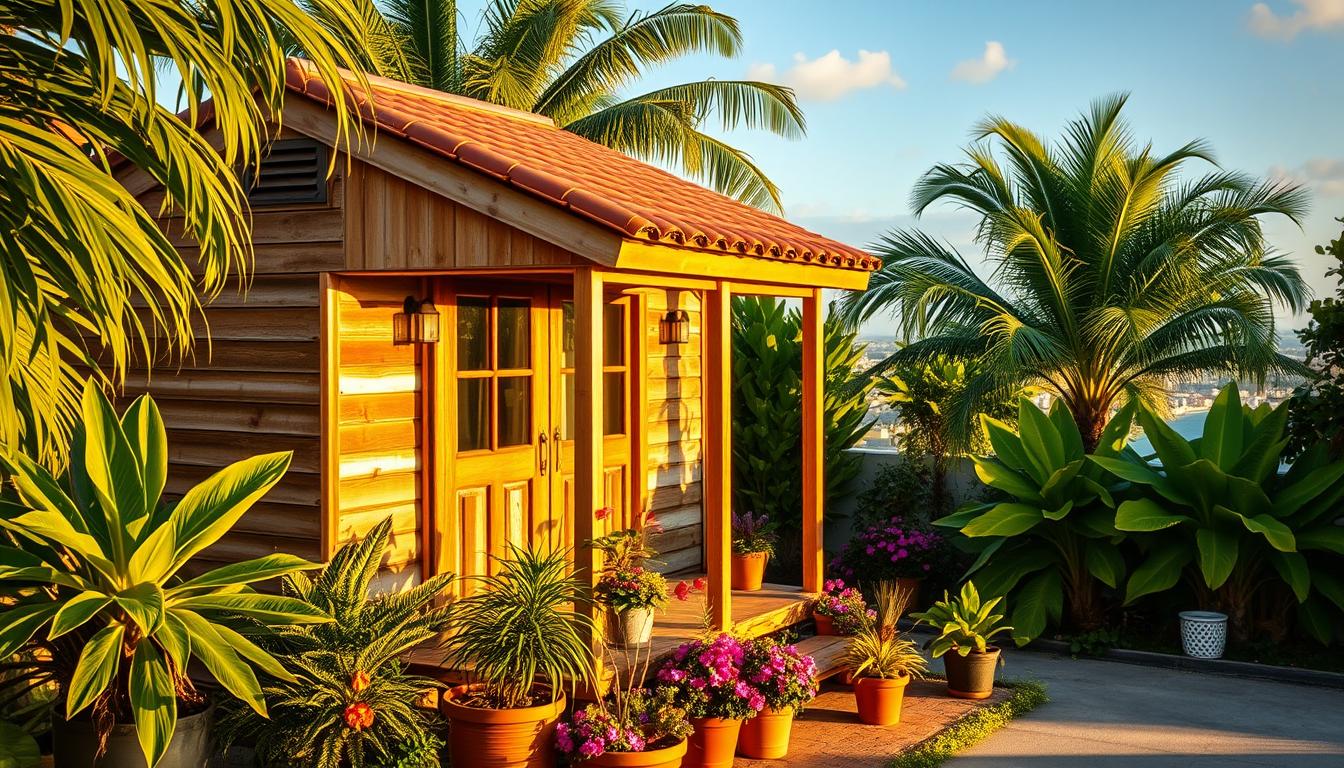
Surprising fact: more than 100 local rentals and over 4,600 reviews show demand for compact, well-designed living options across Coral Way, Wynwood, and Biscayne Park.
You came here to find a small home that acts as a calm retreat and a practical property investment. This page explains how a Florida Building Code–approved shell, engineered and permitted, gives you a weather-tight start for your interior vision.
Expect clear guidance on construction, site prep, utilities, and ADU placement rules in Miami‑Dade County so you can plan budget and timeline with confidence.
You’ll also see real market proof that rentals thrive near the Design District and South Beach, and learn which layout, light, and material choices expand perceived space within 100–400 square feet.
Key Takeaways
- Demand is proven: 100+ rentals and 4.6K+ reviews show strong market interest.
- Florida code allows habitable units up to 400 sq ft when engineered and permitted.
- Approved shells simplify construction and let you focus on interior design and living needs.
- Permitting, utilities, and site prep shape cost and timeline—plan them early.
- Smart layout, light, and materials increase usable space and calm atmosphere.
Discover Tiny Living in Miami: A Service Built Around You
Start with a delivered, code-ready shell that turns a complex build into a clear, predictable project. Your engineered prints meet Florida Building Code so the home is legally habitable and ready for interior finish work.
You’ll join a responsive team for a virtual 3D design session where you visualize layouts, review total cost pricing, and set delivery timelines. That session helps you lock in options that match your needs and keep the project on schedule.

- Full-service approach: from design to delivery so construction stays organized and predictable.
- Code-ready shell: simplifies building and shortens lead times while preserving interior freedom.
- Permit support: Permit Geeks guide applications and approvals across local areas and jurisdictions.
- Budget clarity: transparent milestones, site-review, and help estimating non-shell costs like utilities and site prep.
You’ll also get early guidance on materials suited to the climate, and practical financing advice so the home and any rentals plan align with your budget. This service is built to help you move from idea to move-in with fewer surprises.
Why Miami Is Perfect for Tiny Homes and Sacred Spaces
Demand across Miami and nearby neighborhoods shows a clear market for compact, well-appointed homes that serve both guests and owners. You can validate this with about 100 rentals and more than 4,600 reviews across Wynwood, Coral Way, Biscayne Park, and beyond.

Real-World Demand: Tiny Home Stays Near Miami Beach, Design District, and Riverwalk
Active rentals near miami beach, the Design District, and Riverwalk signal steady guest interest. Listings often include kitchens, AC, free parking, and dedicated workspaces—amenities guests expect.
Lifestyle Advantages: Sunshine, outdoor living, and access to city amenities
You benefit from proximity to beaches, cultural districts, and nightlife. Choose a quiet Biscayne Park spot or a Wynwood-adjacent lot to match your lifestyle and long-term property goals.
- Flexible options: riverfront, artsy, or beach-adjacent locations increase occupancy potential.
- Outdoor living: patios and shade structures extend usable living space year-round.
- Work-ready: fast internet and climate control support remote living and rentals.
| Area | Common Amenities | Why It Works |
|---|---|---|
| Wynwood / Design District | Art access, nightlife, walkability | High visibility and demand for short stays |
| Biscayne Park / Coral Way | Quiet yards, garden cottages, parking | Appeals to long-term residents and owners |
| Fort Lauderdale & Riverwalk | Waterfront access, dining, transit | Broader area demand boosts occupancy |
What You Get: Florida Building Code-Approved Tiny Home Shells
Begin your project with a weather-tight, engineered shell designed for local climate and permitting. This package gives you a sturdy exterior so you can focus on interior design and phased build-out.
Build Quality: You get robust floors, solid framing, and durable siding and roofing engineered for coastal conditions. Wind resistance and moisture details are built into the specs to protect your property and future occupants.
Engineered Prints: Our stamped plans follow the florida building code and local regulations, simplifying permitting and proving the structure is legally habitable up to 400 square feet.

Delivery and Installation
Delivery places the shell directly on your prepared foundation, cutting coordination time and reducing onsite construction headaches. You preserve creative control of finishes while relying on code-compliant construction documentation.
“A code-ready shell lets you phase costs, reduce risk, and keep your build timeline predictable.”
- Streamlines permitting: engineered prints match building requirements.
- Speeds construction: weather-tight shell lowers exposure and site risk.
- Protects value: documentation supports resale and inspections.
Permits, Local Zoning, and ADUs in Miami-Dade County
Start with a permit check: rules on setbacks, easements, and jurisdiction will guide your site plan. You can place an ADU on single- or multi-family property when there’s enough space, typically in the backyard or side yard, but you must meet local regulations and setback requirements.

ADU Siting: backyard or side yard placement
Backyard siting is common, yet easements and access impact placement. Side-yard units often need stricter clearances.
Who governs your permit
Permit review depends on whether your lot lies inside a city or in unincorporated miami-dade county. Confirm your address early so you can plan realistic timelines.
Meeting specific requirements
Prepare documents that show compliance with local zoning, Florida building codes, and inspection checklists. Differentiate temporary structures from a habitable tiny home to avoid improper approvals.
Permit Geeks partnership
Permit Geeks helps you from application to approval. Their guidance reduces back-and-forth and aligns engineering, utility coordination, and inspection scheduling with authority needs.
“Document engineering and site plans thoroughly to speed review and reduce change requests.”
- Plan clear access and utility routing for electrical, water, and internet.
- Keep height, lot coverage, and use classification within local requirements.
- Align your schedule with the authority having jurisdiction to avoid delays.
| Topic | What to Check | Why It Matters |
|---|---|---|
| Siting | Setbacks, easements, access | Ensures legal placement and prevents rework |
| Jurisdiction | City vs. unincorporated county | Affects permit timeline and reviewer rules |
| Compliance | Local zoning, building codes, inspections | Required for occupancy and resale value |
Layouts and Floor Plans That Maximize Your Living Space
Thoughtful floor plans make compact builds feel expansive and purposeful. You can optimize 100–400 square feet by focusing on clear circulation, sightlines, and balanced window placement.

Smart Square Footage: 100-400 square feet that live larger
Place kitchen and bath cores close together to reduce construction complexity and service runs. This frees more open area for daily life and flexible uses.
Space-Savvy Ideas: Multi-use furniture, built-ins, and light
Integrate Murphy beds, fold-down tables, and sofas with storage to reclaim floor space. Built-ins create tidy visual flow and reduce clutter.
Designing a Home That Feels Sacred: Flow, light, and materials
Use higher ceilings, glass doors, and reflective finishes to amplify daylight while keeping privacy. Choose durable materials that resist humidity and reflect light for longevity and calm.
- Cross-ventilation: align shell openings with interior layout to boost airflow and outdoor connection.
- Virtual 3D design: test cabinet runs, loft clearances, and lighting scenarios before construction.
- Service planning: map mechanical chases and access panels early to simplify maintenance.
“Design that prioritizes flow, storage, and daylight lets a small house fit your daily needs without sacrifice.”
Transparent Pricing: Beyond the Tiny House Shell
Transparent pricing helps you see true costs before the first shovel hits the ground. You budget beyond the shell by accounting for site prep, utilities, permits, and finish work so the total price matches your expectations.
Site Preparation
Plan clearing, grading, and a code-compliant foundation suited to local soils and drainage. Early site work reduces surprises and protects your construction schedule.
Utility Connections
Map power, water, and internet routes before delivery. If municipal service is unavailable, include well and septic options in your estimates.
Impact Fees and Permitting
Expect jurisdictional variation in fees and review times. Align scope with local requirements and add a contingency of 10–15% for unknown conditions.
Customization and Upgrades
Interior finishes—kitchen, bath, millwork, and lighting—drive final cost. Phase spending: prioritize structure and services, then allocate funds for higher-end design choices.

- Get multiple contractor estimates to benchmark fair market pricing.
- Coordinate delivery with site readiness to avoid idle time and extra fees.
- Use a virtual 3D session to finalize layout and reduce waste.
- Consider cost-saving materials like modular cabinetry and durable LVP for Miami climates.
“Build in contingency, verify utility access early, and phase upgrades to keep the project on budget.”
Financing Options That Fit Your Project
Find a financing plan that fits your timeline so you can keep the project moving without surprises. Our choices match common build phases and help you cover site prep, utilities, and finishes.

Personalized Loans up to $250,000
Secure personal loans up to $250,000 with funds in 1–3 days. These loans speed delivery and avoid schedule gaps that slow construction.
Same‑As‑Cash: 30, 60, or 90 Days
No-interest Same‑As‑Cash plans give you 30, 60, or 90 days with no interest and no credit check. Use interim payments to manage early buys and contractor draws.
No Home Equity Needed; No Prepayment Penalties
You do not need to tap home equity to buy your tiny home. Credit-friendly pre-approvals let you explore options without hurting your score.
- Pre-plan draw timing to match delivery and key purchases.
- Pay off early with no penalties to cut borrowing costs.
- Work with our team to compare pathways for speed, cost, and flexibility.
- Keep documentation ready for permits and lender disbursements.
“Tailor financing to project milestones so funding supports real progress.”
Service Areas Across Miami and Beyond
Choose the best location by matching neighborhood character, permit timelines, and guest demand to your project goals.
Core service areas cover Miami, Miami Beach, North Miami, Coral Gables, and Miami Gardens. You can build and deliver within these neighborhoods where active rentals and strong reviews show steady guest appeal.

Nearby cities and expanded reach
For broader options, you can extend delivery and permitting support to Fort Lauderdale, Pompano Beach, Hollywood, and Dania Beach. These areas often provide alternate permitting pathways and different impact fee schedules.
How to pick the right area for your property
We recommend weighing commute, amenities, and lot constraints before committing. Review access, setbacks, and lot size to confirm your chosen house layout will fit local rules.
- You can leverage hospitality demand across these areas to future-proof rentals and short-term stays.
- Plan utility tie-ins early; provider timelines vary by location and workload.
- Optimize layouts for micro-lots common in older neighborhoods while keeping code clearances.
- Coordinate delivery routes and staging space based on street grid and access to avoid delays.
“Compare permit queues and impact fees across municipalities to keep your timeline realistic.”
Soulful Tiny Homes in Miami, Florida (FL) That Feel Sacred
Choose a layout that turns limited square footage into calm, useful spaces for daily living. Pair a code-ready shell with mindful design so light, storage, and flow work together.

Balance floor plans and finishes to match your needs. Select options that add storage without crowding the main living area. Use durable materials, shading, and cross-ventilation to suit coastal climates.
Validate neighborhood fit by checking successful stays from miami beach to fort lauderdale, north miami, and pompano beach. These markets show how outdoor rooms and compact designs increase appeal.
- Keep service cores close to reduce complexity and cost.
- Use engineered prints to ease permitting and improve resale confidence.
- Choose financing options like Same‑As‑Cash or loans to avoid tapping home equity.
“Ground the project in a clear vision that blends aesthetics, performance, and compliance.”
Your Process: From Virtual Design to Move-In
From your first virtual meeting, we map milestones so you always know when plans, permits, and delivery will align. You work closely with our team in a live 3D session to adjust layout, windows, and storage and to see pricing and lead times in real time.

Design in 3D with real-time changes
Use the 3D review to test sightlines, furniture, and light. This design step reduces surprises and speeds approvals.
Engineering and permitting
We produce engineered prints tied to the Florida Building Code so your plans meet local review and building codes. This engineering proves structural integrity for long-term value.
Delivery, installation, and site review
Delivery sets the shell on your prepared foundation after a site check confirms access and utility stubs. On-site coordination minimizes construction time and protects your property.
Interior build-out and closeout
Finish the interior to your style and budget. Confirm door and window specs, schedule inspections per requirements, and verify panel, GFCI, water pressure, and network before final sign-off.
- Track milestones: plans, permits, delivery, set, finish.
- Document materials and warranties for resale and maintenance.
- Complete a walkthrough checklist so every detail meets your expectations for the new home.
“A clear process ties 3D design, engineering, and site work into predictable progress toward move‑in.”
Proof You Can Trust: Compliance, Testimonials, and Long-Term Value
When building near the coast, verifiable engineering and responsive service make the difference between a headache and a smooth project. You get clear records, stamped plans, and crews that follow timelines so the work stays predictable.
Customer Praise for quality builds, smooth delivery, and service
Customers report sturdy homes with ample hurricane-proofing and fair pricing. They praise smooth site surveys, fast prep, timely delivery, and setup that matched expectations.
Minor issues were handled quickly under warranty. Positive reviews highlight professional teams and transparent communication that support rentals and owner use alike.
Engineered for Durability, Safety, and Resale confidence
Engineering supports permitting and proves structural integrity for long-term performance. You benefit from documentation that local building reviewers and inspectors accept.
That compliance reduces permitting friction and helps protect resale value when you document plans, inspections, and materials.
- You can trust proven results: smooth surveys, delivery, and setup.
- Engineered structures improve safety, durability, and insurance clarity.
- Documentation aligns with building code, regulations, and specific requirements.
- Active rentals nearby show market demand and support property value.
- Warranty support and prompt issue resolution reduce long‑term risk.
| Proof Area | What It Shows | Benefit to You |
|---|---|---|
| Testimonials | Quality builds, responsive teams | Confidence for buyers and hosts; supports rentals |
| Engineering Records | Stamped plans, load calculations | Eases permits and boosts resale |
| Inspections | Local building and florida building reviews | Meets regulations and specific requirements |
Conclusion
Wrap up your plan by scheduling a 3D design session to finalize layout, costs, and delivery timing. In that meeting, the team will confirm location details and align budget to your needs.
You can choose flexible financing—including fast personal loans up to $250,000 or Same‑As‑Cash—so you move forward without tapping home equity. Our services cover permitting, delivery, and installation to keep the project coordinated end-to-end.
Take cues from nearby rentals when selecting finishes, and plan your door and window package for light, airflow, and security. Verify regulations early so building steps stay sequenced and documented. Book your session and bring your home miami vision to life.
FAQ
What areas do you serve around Miami and nearby cities?
You can get service across Miami-Dade County including Miami, Miami Beach, North Miami, Coral Gables, and Miami Gardens. The team also supports projects in the greater corridor: Fort Lauderdale, Pompano Beach, Hollywood, and Dania Beach. Service availability may vary by lot zoning and access; confirm your address for exact options.
Are the homes built to Florida building code and safe for long-term living?
Yes. The shells come with engineered prints aligned to Florida Building Code for legal, habitable builds. Structural framing, durable siding, roofing, and engineered floors meet local requirements so you can pursue permits and inspections for long-term occupancy.
How do permits and local zoning work for accessory dwellings (ADUs) in Miami-Dade?
ADU siting depends on your parcel’s zoning, setbacks, easements, and whether you’re inside city limits or in unincorporated county. You’ll need to follow local building codes, submit permit applications, and pass inspections. The Permit Geeks partnership provides guided help from application to approval.
What square footage options and floor plans are available?
Floor plans generally range from about 100 to 400 square feet and are designed to live larger through open flow, built-ins, and multi-use furniture. You can choose layouts optimized for sleeping lofts, full kitchens, or studio living depending on your needs and lot constraints.
What site work is required before delivery and installation?
You’ll need a prepared foundation or pad, grading, and cleared access for delivery equipment. Site prep often includes a level surface, utility stub locations, and any required retaining or drainage work. The team can advise on local site-prep contractors and required permits.
How do utility connections work—power, water, sewer, and internet?
Utility needs vary by location. Standard connections include electric and water hookups to existing lines; some sites may require well and septic systems. Internet and cable are handled through local providers. The project budget should include trenching, meter installations, and hookup fees as required.
What are typical costs beyond the shell price?
Beyond the shell, budget for site preparation, foundation, utility hookups, impact fees, permitting, delivery/installation, and interior finish-outs. Customization, upgrades, and systems like septic or solar add to the total. The team provides line-item estimates to help you plan.
What financing options are available and do I need home equity?
Financing includes personalized loan products up to 0,000, flexible terms, and same-as-cash offers (30/60/90 days) in some cases. Many programs do not require home equity and have no prepayment penalties. Loan approval depends on credit, project scope, and lender criteria.
How long does the process take from design to move-in?
Timeline varies by customization, permitting, and site readiness. Typical phases include virtual 3D design (weeks), engineering and permit submission (weeks to a few months), factory build and delivery (weeks to months), and on-site installation and finish (days to weeks). Your project manager will provide a schedule tailored to your location and scope.
Can I customize finishes and layouts to match my style or budget?
Yes. You can select finishes, cabinetry, fixtures, and layout tweaks. Options range from entry-level finishes to high-end custom interiors. The team offers upgrade packages and a la carte choices so you can balance aesthetics and budget.
Are these units suitable for rentals or short-term stays near Miami Beach and the Design District?
Many buyers outfit units for long-term rental or short-term stays, especially in high-demand areas near Miami Beach, the Design District, and Riverwalk. Local short-term rental regulations, HOA rules, and city ordinances may apply, so check zoning and licensing before listing.
What inspections and compliance steps are required after installation?
Post-install inspections typically include structural, electrical, plumbing, and final occupancy checks per local building code. You must schedule inspections with your city or county building department and obtain final approval before occupancy.
How do you handle delivery and placement on tight urban lots?
Delivery and placement require a site review to assess access, overhead obstructions, and equipment needs. For tight urban lots, the team coordinates crane placement or specialized trailers and obtains any necessary street permits to ensure safe installation.
What warranties or long-term support do you provide?
Warranties vary by component and builder. Standard coverage often includes structural and workmanship warranties for a defined period, plus manufacturer warranties on systems and appliances. The team provides documentation and aftercare guidance for maintenance and repairs.
How do I start the design and permitting process?
Begin with a consultation to review your site, goals, and budget. You’ll work with the design team in 3D to finalize floor plans, then move to engineering and permit-ready drawings aligned with Florida Building Code. From there, the team helps submit permits and coordinate inspections.