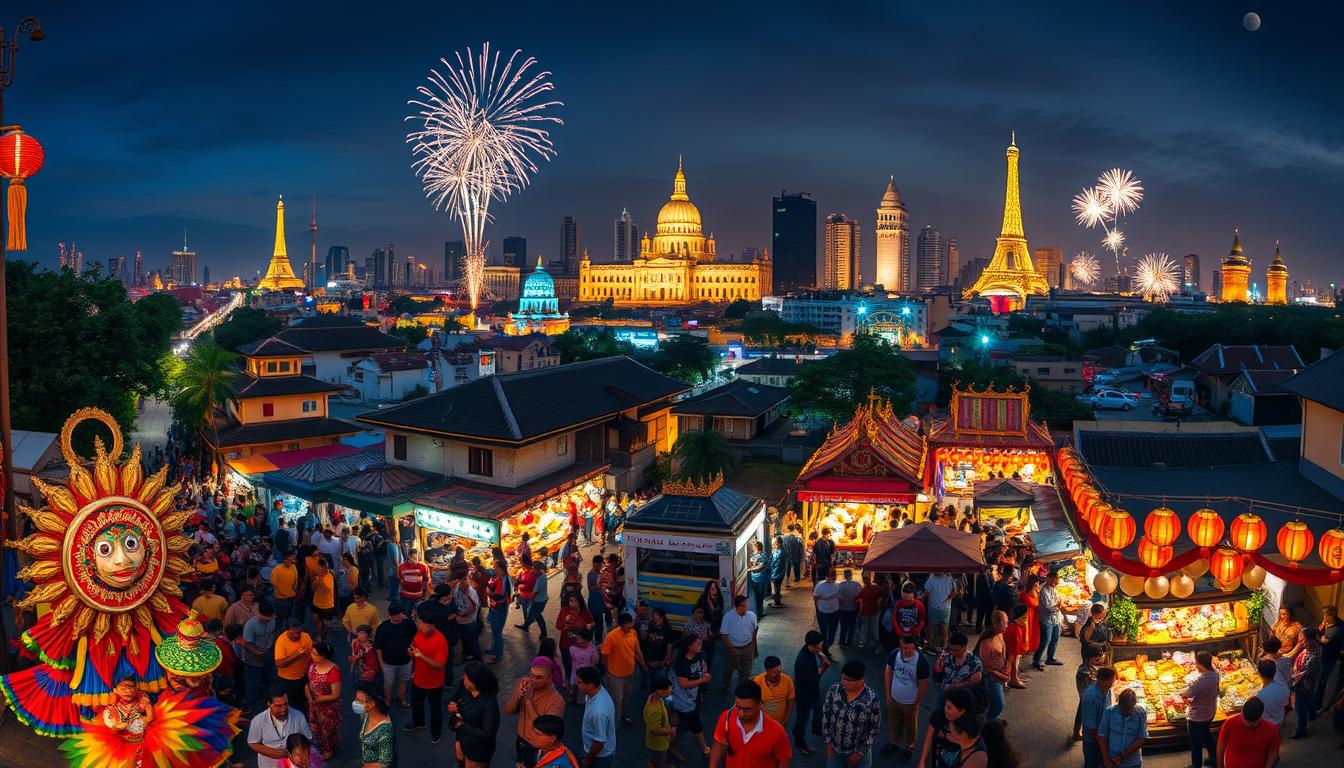
Did you know that over 2 million people gather annually for Rio Carnival, making it one of the largest celebrations on Earth? Cultural festivals like this offer a unique window into traditions, creativity, and community spirit. From vibrant parades to quirky food fights, these events bring people together in unforgettable ways.
This article explores diverse celebrations across six continents. You’ll discover iconic events like Spain’s La Tomatina, where thousands toss tomatoes in a massive food fight, and India’s Holi, a colorful festival of unity. Each celebration tells a story, blending history, art, and local customs.
Whether you’re planning a trip or simply curious, this guide provides insights into these extraordinary gatherings. Get ready to explore the world’s most vibrant and unique traditions!
Key Takeaways
- Cultural festivals showcase global traditions and creativity.
- Events span six continents, offering diverse experiences.
- Iconic celebrations include Rio Carnival and La Tomatina.
- Unique aspects range from food fights to religious rituals.
- Learn historical insights and practical travel tips.
Introduction: Discover the World’s Most Fascinating Festivals
From ancient rituals to modern spectacles, festivals unite people globally. These events are more than just parties; they’re a way to preserve traditions and showcase cultural diversity. Whether it’s a religious ceremony or a quirky food fight, each celebration tells a story.
Many festivals have deep historical roots. For example, Mexico’s Day of the Dead is recognized by UNESCO for its cultural significance. It’s a time to honor ancestors and celebrate life, blending indigenous and Catholic traditions.
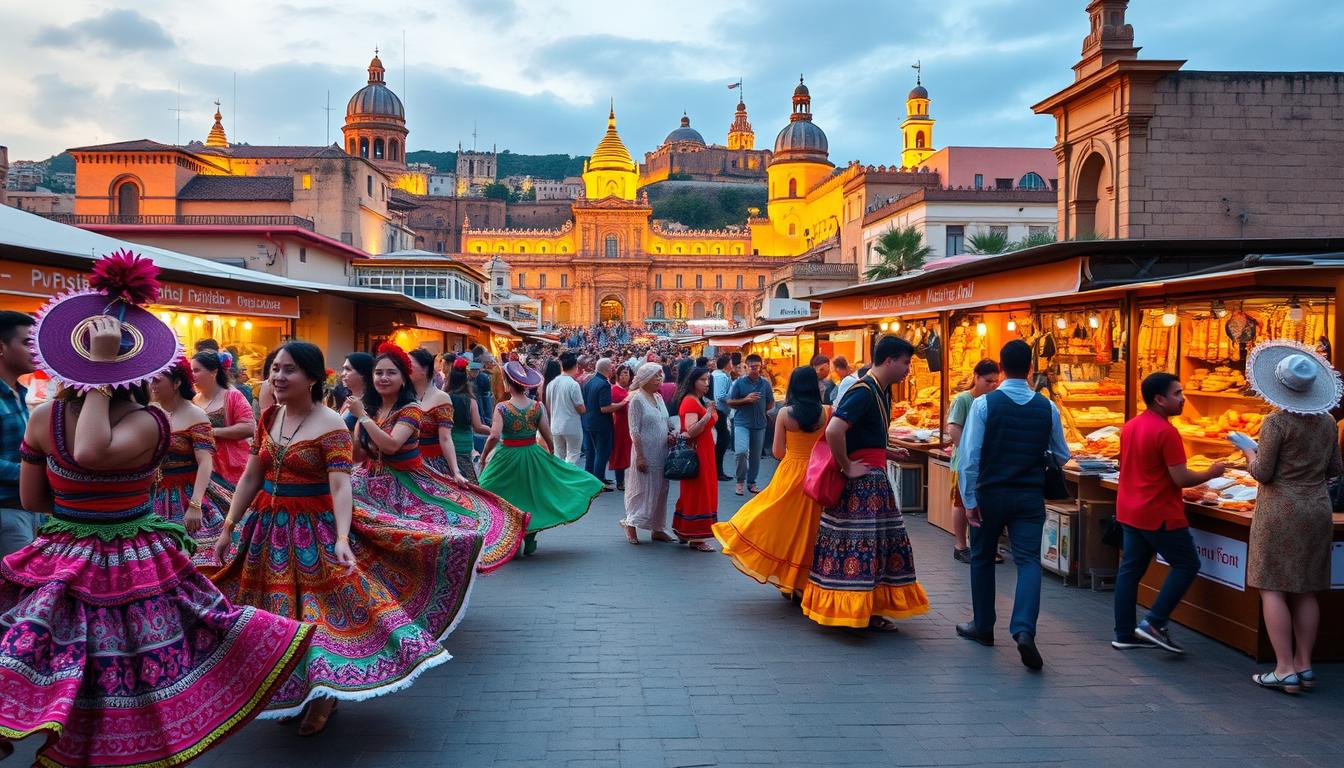
Attendance numbers for these events are staggering. Over 6 million people flock to Germany’s Oktoberfest each year, while Spain’s La Tomatina sees 40,000 participants tossing 145,000kg of tomatoes. These gatherings aren’t just fun; they also boost local economies. Mardi Gras in New Orleans generates over $800 million annually.
Here’s a quick look at some unique elements of these celebrations:
| Festival | Unique Feature |
|---|---|
| Up Helly Aa | Viking ship burnings |
| Cherry Blossom Festival | Symbolism of sakura |
| Rio Carnival | Grand parades and samba |
These festivals are a testament to the creativity and resilience of communities. They remind us of the beauty of shared experiences and the importance of preserving traditions for future generations.
1. Oktoberfest in Germany
Germany’s Oktoberfest is a celebration of beer, food, and tradition. Held annually in Munich, this festival attracts millions of visitors from around the globe. Theresienwiese fairgrounds, the event’s home, features 17 major tents, each offering a unique atmosphere.
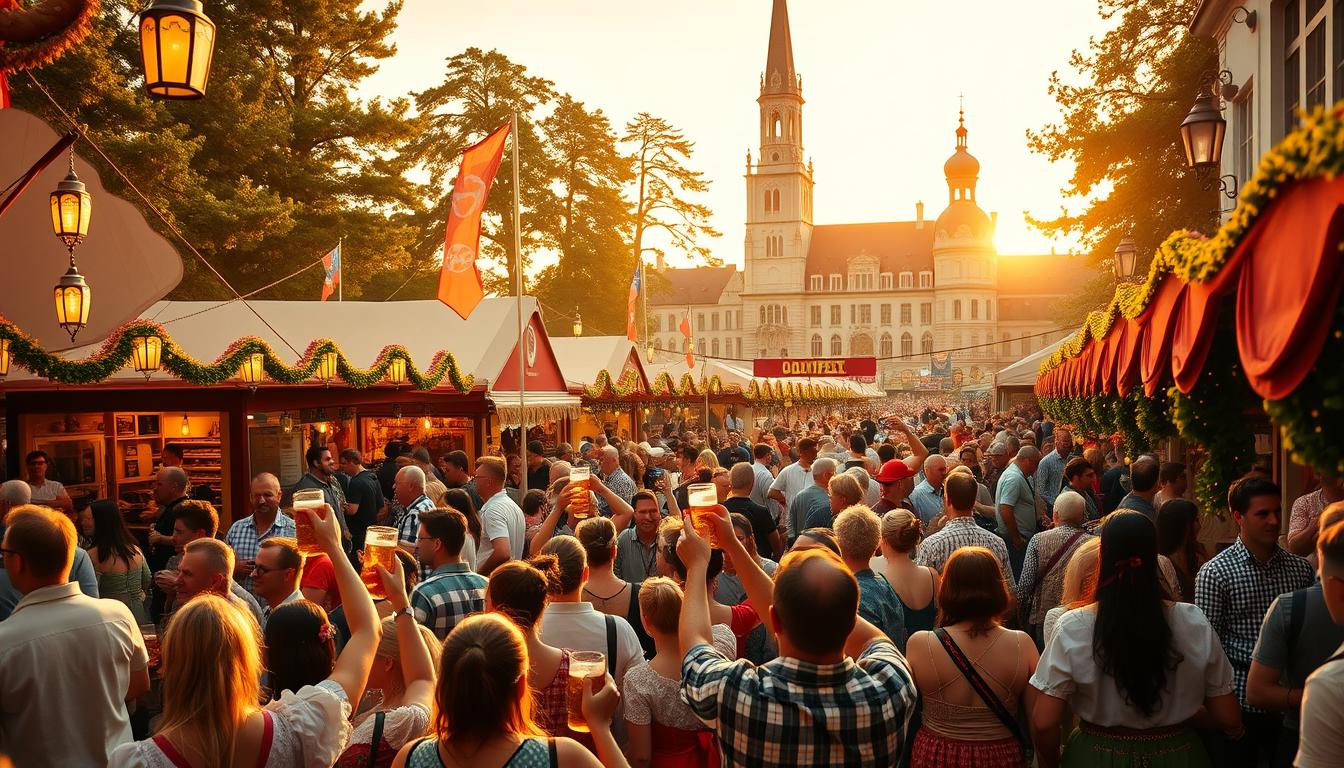
The festival’s traditions are deeply rooted in history. It began in 1810 as a royal wedding celebration. Today, it’s a global symbol of German culture. Beer is the heart of Oktoberfest, served in Maßkrüge, the iconic 1-liter mugs. Attendees often wear Trachten, traditional Bavarian outfits, adding to the festive vibe.
One of the most anticipated moments is the keg-tapping ceremony. The mayor of Munich declares “O’zapft is!” (It’s tapped!), officially opening the festival. This marks the start of days filled with music, dancing, and merriment.
Food plays a central role too. Must-try dishes include Schweinshaxe (pork knuckle), Brezen (pretzels), and Obatzda (cheese spread). Mornings are family-friendly, with activities for kids. As the day progresses, the atmosphere becomes livelier, culminating in rowdy evenings.
| Highlight | Details |
|---|---|
| Location | Theresienwiese fairgrounds, Munich |
| Dates | September 22 – October 7 |
| Beer Rule | Only Munich-brewed beer is served |
| Must-Try Foods | Schweinshaxe, Brezen, Obatzda |
For over 200 years, Oktoberfest has been a testament to Munich’s vibrant culture. Whether you’re a beer enthusiast or a foodie, this festival offers an unforgettable experience.
2. Day of the Dead (Dia de Muertos) in Mexico
Mexico’s Day of the Dead is a vibrant celebration of life and remembrance. Recognized by UNESCO as an Intangible Cultural Heritage, this event blends indigenous and Catholic traditions. Families gather to honor their ancestors, creating a unique atmosphere of love and respect.
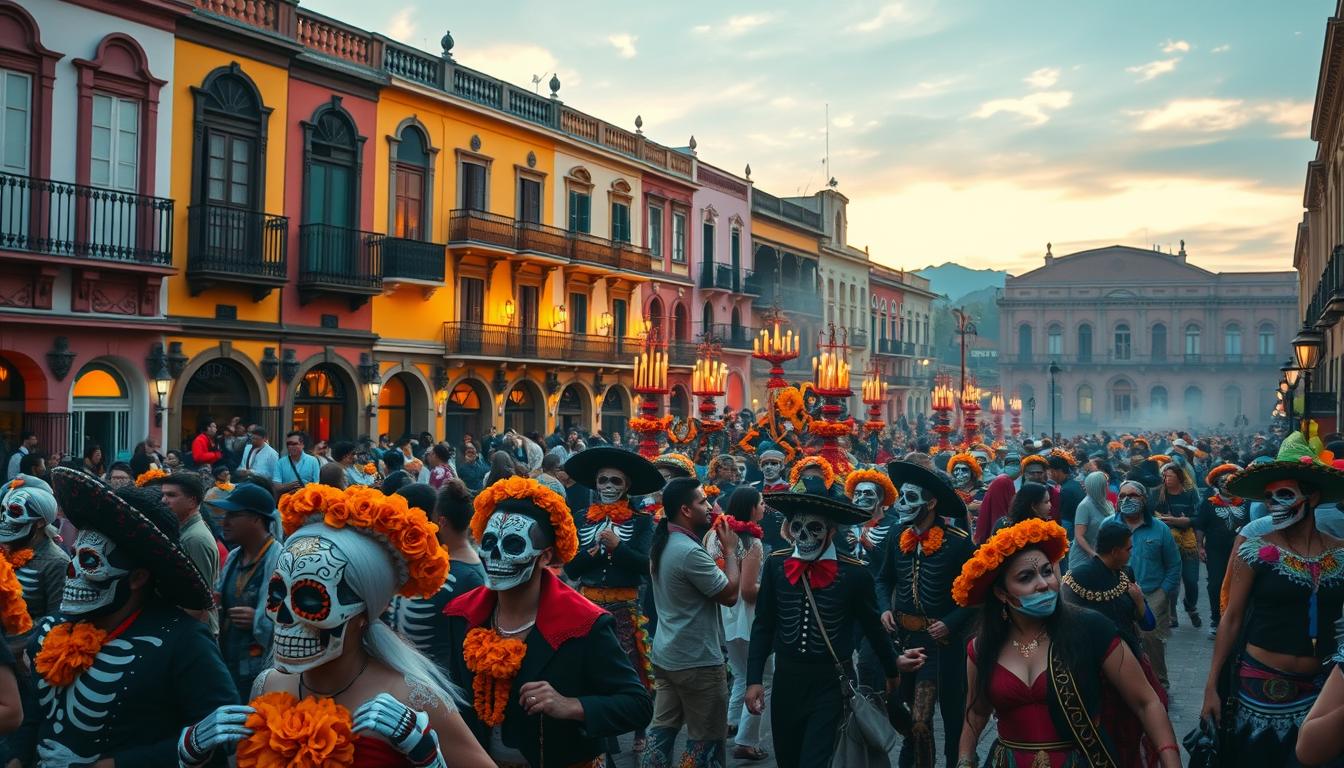
The festival spans two days. November 1, known as Día de los Angelitos, is dedicated to children who have passed. November 2 focuses on adult souls. Streets are adorned with marigold petals, believed to guide spirits back to their loved ones.
Cultural Significance
Symbolism is central to the Day of the Dead. Calavera makeup, featuring skull designs, represents rebirth rather than evil. Marigold paths, or cempasúchil, are thought to lead spirits to altars. These altars, called ofrendas, are filled with offerings like pan de muerto, salt, and copal incense.
Unique Celebrations
In Oaxaca, cemetery vigils are a highlight. Families spend the night by graves, sharing stories and music. Mixquic’s Alumbrada is another spectacle, with candlelit cemeteries creating a magical glow.
Papel picado, intricately cut paper banners, adds color to the festivities. Crafted by hand, these decorations symbolize the fragility of life. Together, these elements make the Day of the Dead a deeply meaningful and visually stunning event.
| Element | Significance |
|---|---|
| Calavera Makeup | Represents rebirth and remembrance |
| Marigold Paths | Guides spirits to altars |
| Ofrenda Altars | Honors ancestors with offerings |
| Papel Picado | Symbolizes life’s fragility |
3. Up Helly Aa Festival in Scotland
Scotland’s Up Helly Aa is a fiery tribute to Viking heritage. Held every January in Shetland, this festival is a unique blend of history, fire, and community spirit. With 1,000 torchbearers lighting up the night, it’s a sight to behold.
The event traces its roots to the 19th century, evolving from tar-barrel rolling to a grand organized celebration. Today, it’s a key part of Shetland’s cultural identity, showcasing traditions that date back centuries.
Viking Heritage
Up Helly Aa’s Old Norse linguistic roots are evident in its rituals. The highlight is the burning of a 30ft galley, symbolizing Viking ship burials. The Guizer Jarl, the festival’s leader, is selected through a 15-year waitlist, ensuring only the most dedicated take on the role.
Fire Festival Highlights
The procession of torchbearers is a breathtaking spectacle. After the galley is set ablaze, squads perform at over 12 community halls, keeping the celebration alive until dawn. Held in January, the event combats Shetland’s 18-hour darkness with warmth and light.
From the clinker-built galley to the vibrant squad performances, Up Helly Aa is a testament to Shetland’s rich history and enduring community spirit. It’s a festival that truly lights up the year.
4. Carnival in Brazil
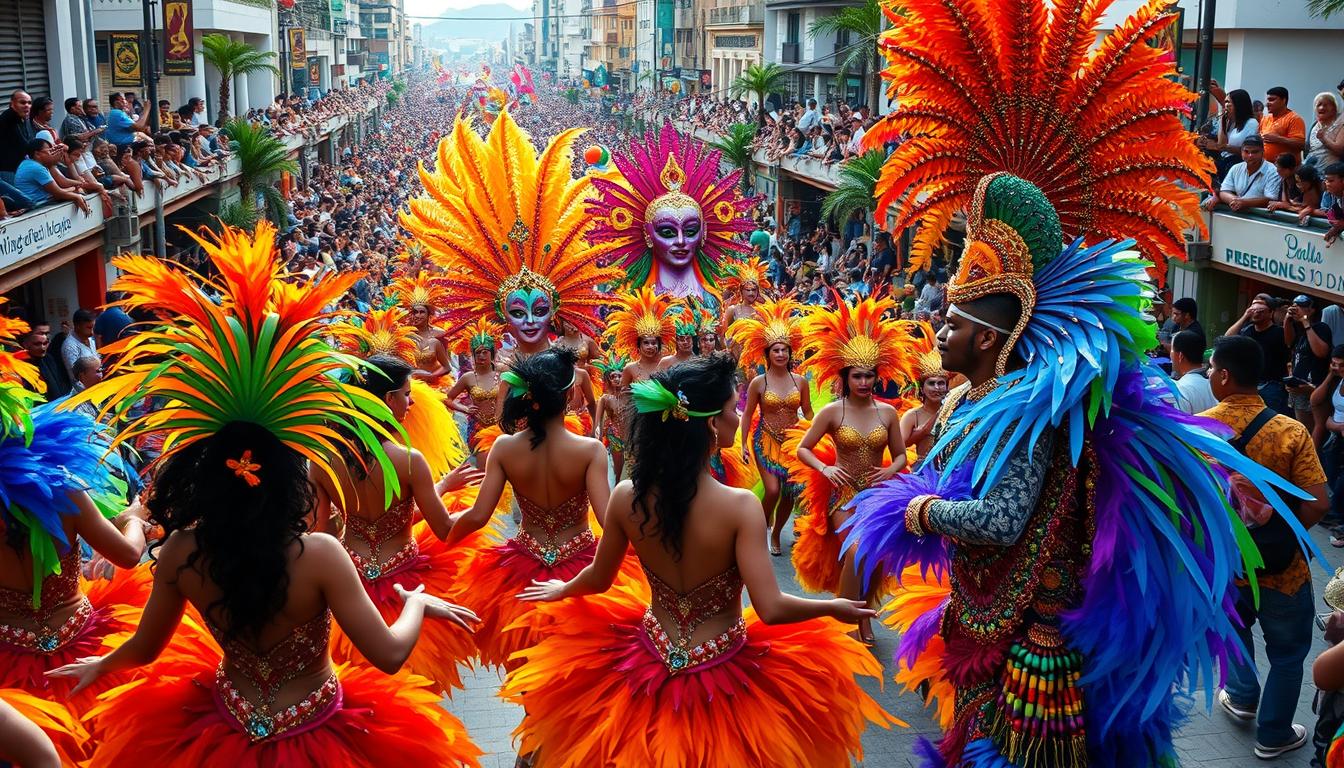
Brazil’s Carnival is a dazzling explosion of culture, color, and rhythm. Held annually in Rio de Janeiro, this event is the largest of its kind, drawing millions to the city streets. With origins dating back to 1723, Carnival has evolved into a global symbol of Brazilian identity.
Rio de Janeiro’s Grand Parade
The heart of Carnival lies in the 72-hour Sambadrome parades. Over 300 samba schools compete, showcasing their creativity through themes, floats, and performances. Judges score each school on four key elements: theme, floats, harmony, and percussion. Top escolas like Mangueira, Vila Isabel, and Salgueiro are known for their innovative presentations and passionate performances.
Samba and Costumes
Samba is the soul of Carnival, blending music and dance into a mesmerizing rhythm. Elaborate costumes are another highlight, with over 4 million feathers used annually to create stunning designs. The ala das baianas, a group of elder women, play a vital role in preserving traditions and adding grace to the parades.
Beyond the Sambadrome, blocos street parties take over the city, attracting over 5 million revelers. These informal gatherings bring people together, celebrating life with music, dance, and camaraderie. Carnival in Brazil is more than a festival; it’s a testament to the country’s vibrant spirit and cultural richness.
5. Mardi Gras in New Orleans
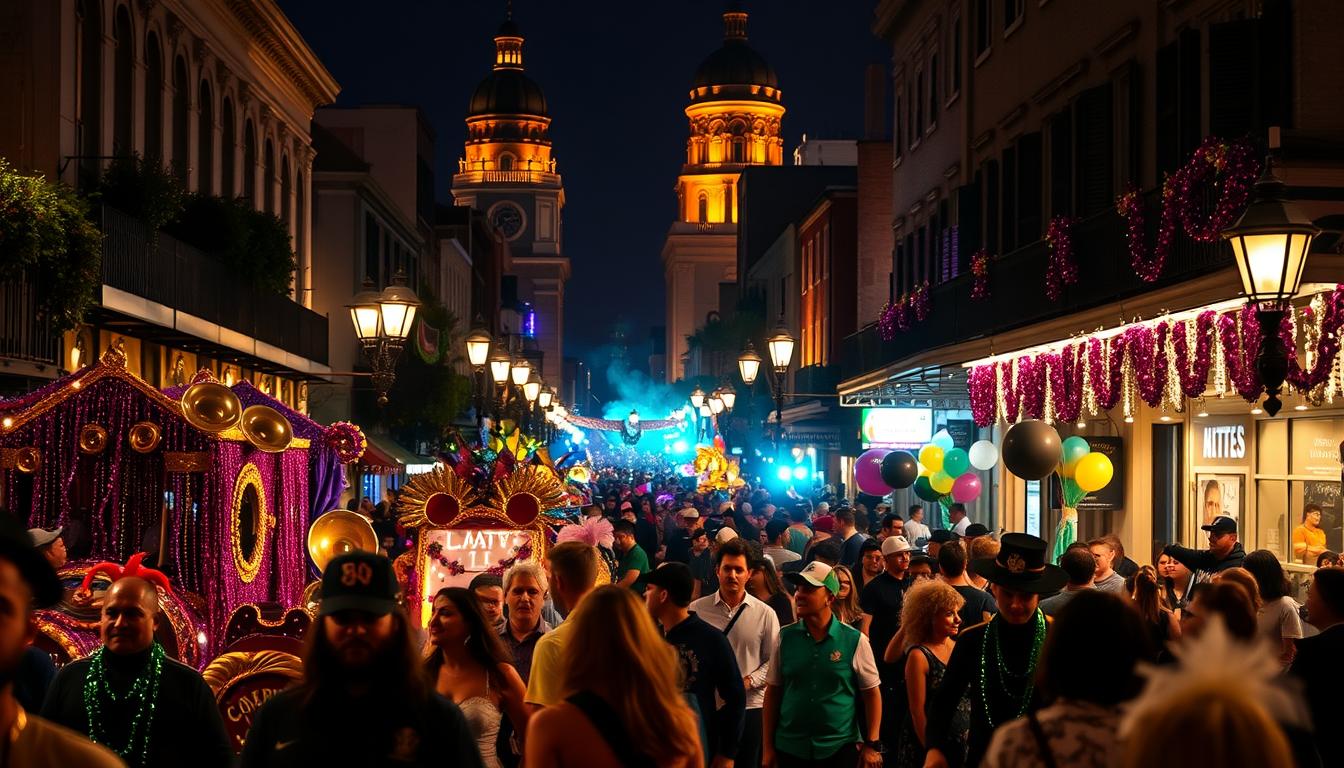
New Orleans’ Mardi Gras is a celebration of life, color, and community. Since its inception in 1837, this event has become a cornerstone of the city’s culture. With over 70 krewes organizing parades, the streets of New Orleans come alive with music, dance, and creativity.
Fat Tuesday Traditions
At the heart of Mardi Gras is Fat Tuesday, the final day of indulgence before Lent. One of the most beloved traditions is the king cake. Hidden inside is a tiny plastic baby, symbolizing luck and prosperity. Whoever finds it hosts the next celebration.
Beads are another iconic element. Each color has a meaning:
- Purple represents justice.
- Gold symbolizes power.
- Green stands for faith.
These beads are tossed from floats, creating a festive atmosphere.
Parades and Masks
The parades are a highlight, with krewes like Rex, Zulu, and Endymion showcasing elaborate floats and costumes. Masks are mandatory for float riders, adding mystery and tradition to the event. Flambeau carriers light up the night, earning up to $500 per evening for their role.
Different streets offer unique vibes. Bourbon Street is known for its lively parties, while Frenchman Street offers a more laid-back, artistic experience. Whether you’re dancing in the crowd or watching the floats, Mardi Gras is an unforgettable experience.
6. Holi Festival in India
Every spring, India comes alive with the joyous Holi Festival. Known as the Festival of Colors, this event celebrates love, unity, and the triumph of good over evil. People of all ages gather to throw vibrant powders, dance, and share sweets, creating a kaleidoscope of joy.
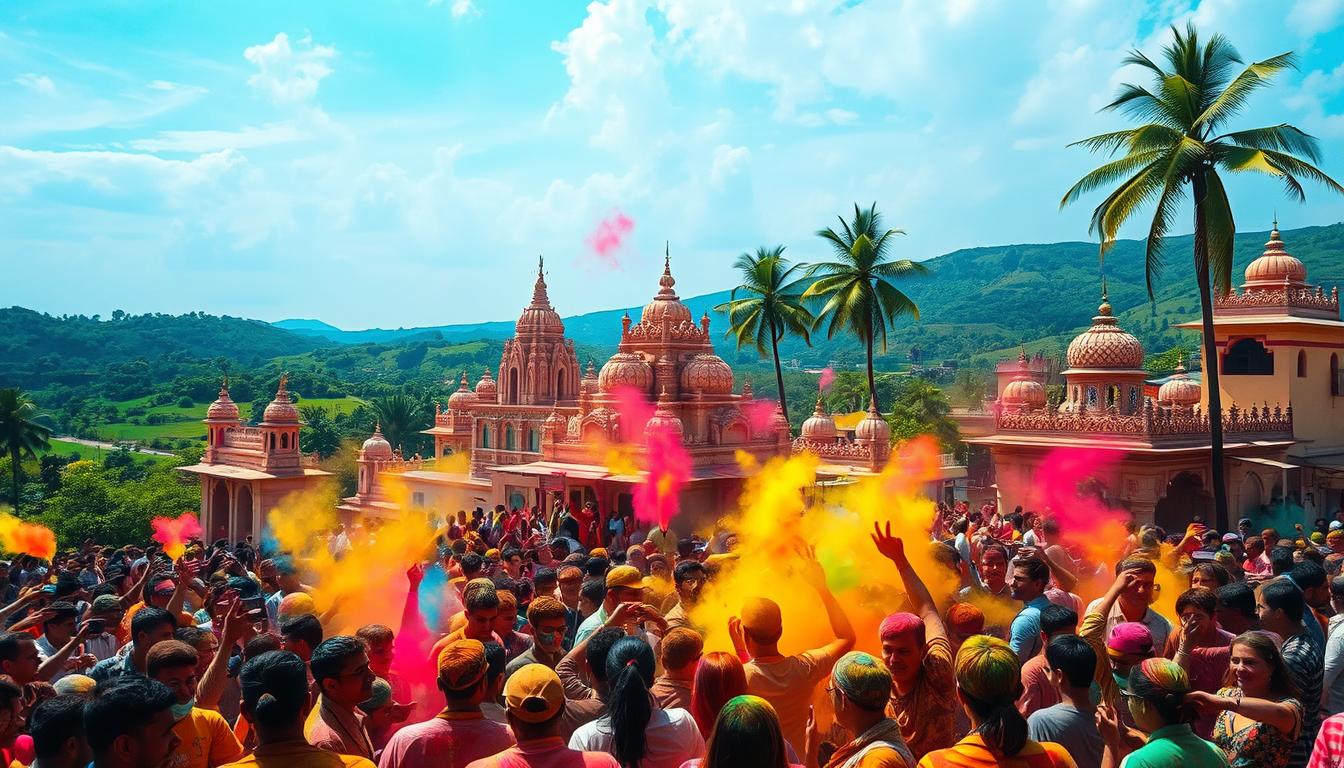
Holi’s origins trace back to ancient legends, including the story of Krishna and Radha. The festival is celebrated on Phalguna Purnima, the full moon day in March. Natural colors like turmeric (yellow), neem (green), and beetroot (red) are used, symbolizing renewal and harmony.
Festival of Colors
The highlight of Holi is the playful throwing of colors. Streets and homes are filled with laughter as people smear each other with bright powders. This tradition fosters a sense of community and breaks down social barriers.
In Barsana, the Lathmar Holi adds a unique twist. Women playfully hit men with sticks, reenacting a legend of Radha and Krishna. This lively dance is a testament to the festival’s blend of fun and tradition.
Symbolism and Celebrations
Holi is deeply symbolic. The burning of Holika, a bonfire lit the night before, represents the victory of good over evil. Govardhan Puja, another ritual, involves worshipping cows, which are considered sacred in Indian culture.
Bhang lassi, a drink made with cannabis leaves, is a traditional part of the celebration. It adds to the festive spirit, though modern urban celebrations often feature DJ parties and contemporary music.
In rural areas, folk songs and dances keep the traditions alive. Whether in bustling cities or quiet villages, Holi is a time for people to come together, celebrate, and embrace the joy of life.
7. Cherry Blossom Festival in Japan
Japan’s Cherry Blossom Festival is a breathtaking celebration of nature’s beauty and cultural heritage. Every year, millions gather to witness the fleeting bloom of sakura, a symbol of renewal and the transient nature of life. This festival is a cherished time for families and friends to come together and enjoy the outdoors.
Hanami Tradition
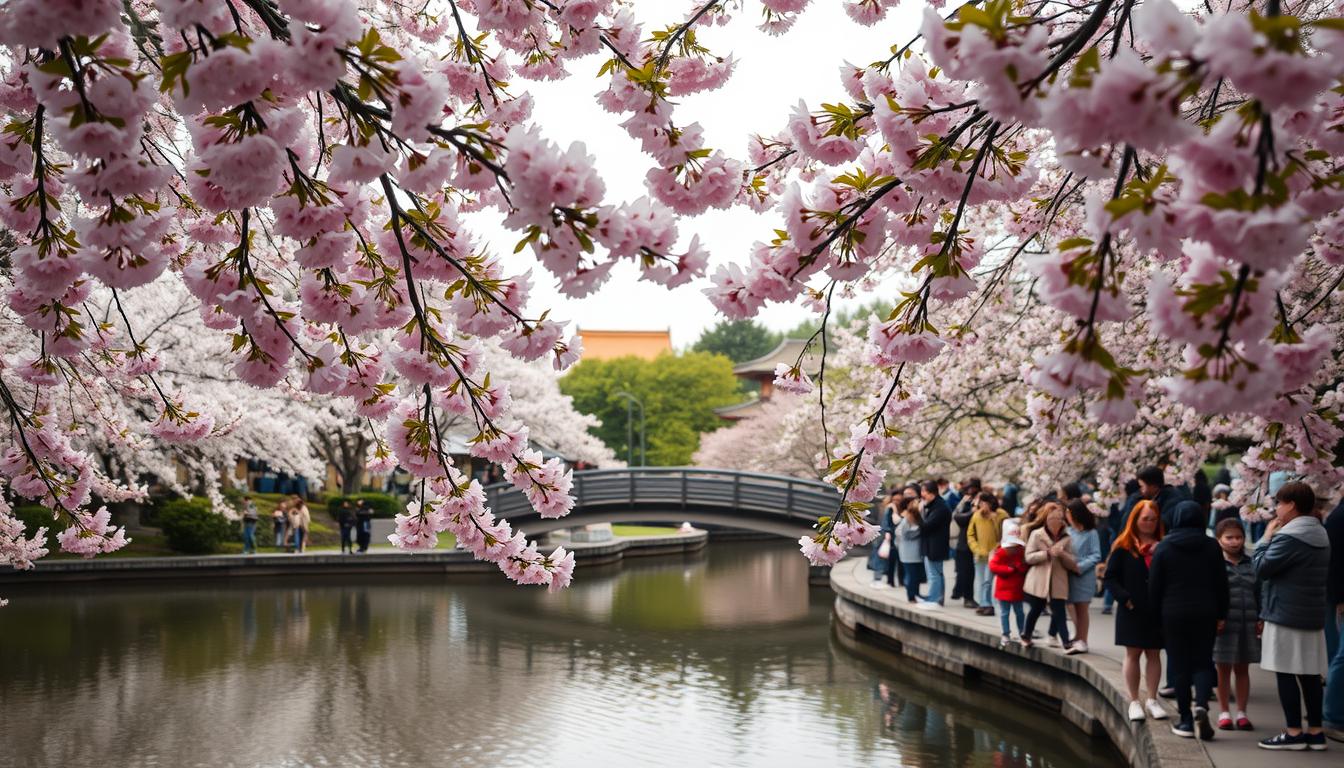
Hanami, or flower viewing, is the heart of the Cherry Blossom Festival. People spread blue tarps under the trees and enjoy picnics with ekiben lunchboxes. The tradition dates back centuries, reflecting Japan’s deep connection to nature.
Yozakura, or night viewing, adds a magical touch. Illuminated cherry blossoms create a serene atmosphere, perfect for evening strolls. This practice highlights the beauty of sakura under the moonlight.
Symbolism of Sakura
Sakura’s five petals symbolize hope, renewal, and the fleeting nature of existence. The concept of mono no aware, or the pathos of things, is deeply tied to the falling petals. It reminds us to cherish every moment.
Special editions like sakura-flavored Pepsi, KitKats, and Starbucks drinks add a modern twist to the festival. These limited-time treats celebrate the season in a unique way.
- Bloom Progression: Cherry blossoms bloom from Okinawa in January to Hokkaido in May, creating a nationwide wave of pink.
- Picnic Etiquette: Use blue tarps and ekiben lunchboxes for a traditional Hanami experience.
- Cultural Taboos: Irezumi tattoos featuring cherry blossoms are historically linked to the Yakuza, adding a layer of cultural complexity.
8. Songkran Water Festival in Thailand
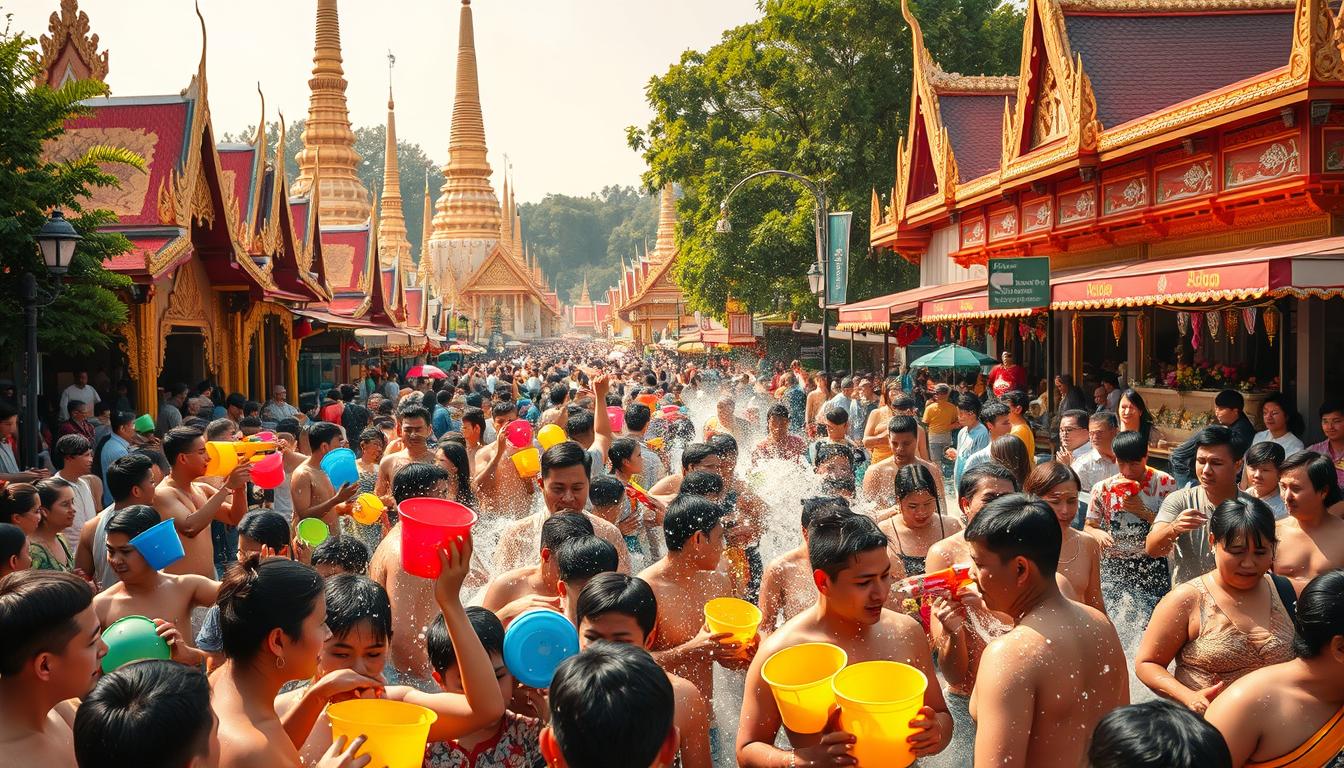
Thailand’s Songkran Festival transforms the streets into a massive water playground. Celebrated in April, this event marks the Thai new year and is a time for families to come together. Rooted in Sanskrit “Sankranti,” meaning “astrological passage,” Songkran blends ancient traditions with modern fun.
Thai New Year Celebrations
Songkran is more than just a water fight. It’s a time for spiritual renewal and merit-making. One unique tradition is building sand pagodas at temples. These structures symbolize the return of sand taken from temple grounds throughout the year.
Another key ritual is rod nam dam hua, where younger generations pour scented water over the hands of elders to seek blessings. This act of respect strengthens family bonds and honors cultural heritage.
Water Fights and Rituals
The festival’s most iconic feature is the massive water battles. From Bangkok’s Khao San Road to Chiang Mai’s moat, the entire country becomes a splash zone. Over 10 million water guns are sold annually, making it a booming business.
Participants gear up with waterproof phone cases and anti-fog goggles to stay protected. The fun doesn’t stop until everyone is soaked, earning Songkran the nickname “Songkran lung” due to the occasional post-celebration pneumonia.
“Songkran is not just a festival; it’s a way of life in Thailand. It brings people together in joy and unity.”
Whether you’re dancing in the streets or honoring elders, Songkran is a celebration of community, culture, and renewal. It’s a festival that truly makes a splash!
9. Burning Man Festival in the USA
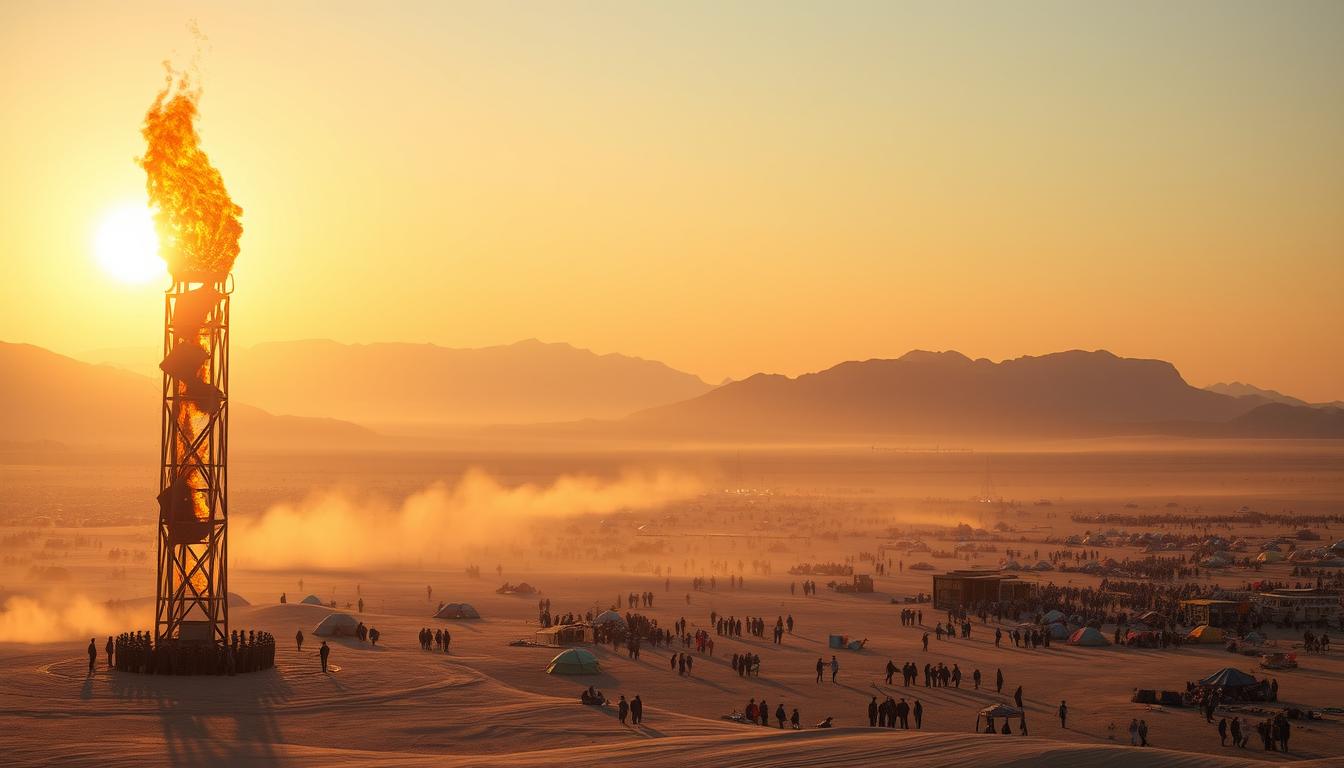
Every year, the Nevada desert becomes a canvas for creativity and self-expression. The Burning Man festival is a unique event that transforms the Black Rock Desert into a temporary city. With over 70,000 participants, it’s a celebration of art, community, and radical self-reliance.
Art and Self-Expression
At the heart of Burning Man is its commitment to art. Over 400 installations dot the desert, each telling a story or sparking imagination. The festival encourages everyone to contribute, whether through art, music, or interactive experiences. Mutant vehicles, creatively modified cars, roam the playa, adding to the surreal atmosphere.
One of the most emotional moments is the Temple burn. This structure, built as a place for reflection, is set ablaze on the final night. It’s a powerful reminder of the transient nature of life and the importance of letting go.
Community and Creativity
Burning Man operates on 10 core principles, including radical inclusion and decommodification. These values foster a sense of unity and shared purpose. Major camps like Distrikt, known for its techno beats, and Kostume Kult, a hub for creative costuming, showcase the diversity of the community.
MOOP (Matter Out of Place) cleanup is a critical part of the event. Participants are responsible for leaving no trace, ensuring the desert remains pristine. This commitment to sustainability reflects the festival’s ethos of respect and responsibility.
“Burning Man is not just a festival; it’s a way of life. It challenges us to rethink how we connect with each other and the world around us.”
From its humble beginnings on a San Francisco beach in 1986, Burning Man has grown into a global phenomenon. It’s a place where art, community, and creativity come together in unforgettable ways.
10. La Tomatina in Spain
Imagine a small Spanish town turning into a tomato battlefield every August. La Tomatina, held in Bunol, is the world’s biggest food fight. This unique festival attracts over 40,000 participants, far outnumbering the town’s 9,000 residents.
World’s Biggest Food Fight
La Tomatina began in 1945 as a playful brawl during a parade. Today, it’s a globally recognized event. The rules are simple: use only squashed tomatoes and avoid tearing clothes. The streets of Bunol become a sea of red as 145,000 kg of tomatoes are thrown in just one hour.
After the chaos, fire trucks hose down the town, and locals work together to clean up. The tomatoes, sourced from Extremadura’s overripe crops, are perfect for this messy tradition.
History and Fun Facts
La Tomatina isn’t just about tomatoes. A paella cooking contest takes place before the fight, with massive 4-meter diameter pans used to prepare the dish. This adds a delicious twist to the festival.
Over the years, La Tomatina has grown into a symbol of joy and community. It’s a reminder that sometimes, the messiest moments bring the most happiness.
Conclusion: Celebrate the World’s Cultural Diversity
Global celebrations offer a window into the heart of cultures. From the solemn Day of the Dead to the chaotic fun of La Tomatina, these events showcase the richness of traditions and the unity of people.
Many celebrations focus on preserving indigenous practices, ensuring that cultural heritage thrives. While festival tourism boosts local economies, it’s essential to balance it with responsible participation. Learning a few local phrases and respecting rules can make your experience more meaningful.
Consider combining these global celebrations with regional travel itineraries. This approach allows you to explore more while immersing yourself in the cultural diversity of each destination. Whether you’re drawn to vibrant chaos or reflective rituals, these events remind us of the beauty of shared experiences.
FAQ
When does Oktoberfest take place?
Oktoberfest happens annually in Munich, Germany, starting in late September and running through the first weekend in October.
What is the cultural significance of Dia de Muertos?
Dia de Muertos, or Day of the Dead, is a Mexican celebration honoring deceased loved ones. Families create altars, offer food, and decorate graves to remember and celebrate their ancestors.
What makes Up Helly Aa unique?
Up Helly Aa in Scotland is a fire festival rooted in Viking heritage. Participants dress as Vikings and parade through the streets before burning a replica longship.
What can I expect at Brazil’s Carnival?
Brazil’s Carnival in Rio de Janeiro features vibrant samba parades, elaborate costumes, and non-stop music. It’s a celebration of culture, creativity, and joy.
What are the traditions of Mardi Gras?
Mardi Gras in New Orleans includes parades, colorful masks, and beads. It’s a lively event marking the last day before Lent, filled with music and festivities.
What is the meaning behind Holi?
Holi, the Festival of Colors in India, celebrates the arrival of spring and the victory of good over evil. People throw colored powders and enjoy music and dance.
What is Hanami in Japan?
Hanami is the tradition of viewing cherry blossoms during Japan’s Cherry Blossom Festival. Families gather under blooming sakura trees to celebrate beauty and renewal.
How is Songkran celebrated in Thailand?
Songkran, the Thai New Year, is celebrated with water fights, rituals, and family gatherings. It’s a time for cleansing and starting anew.
What is the focus of Burning Man?
Burning Man in Nevada emphasizes art, self-expression, and community. Participants create a temporary city in the desert, showcasing creativity and collaboration.
What happens during La Tomatina?
La Tomatina in Spain is the world’s biggest food fight. Thousands gather in Buñol to throw tomatoes at each other in a fun and messy celebration.